
“Success is nothing more than a few simple disciplines, practiced every day.” — Jim Rohn
A good supplier outreach email is short, specific and easy to answer. It says who you are, which products you want to sell, and asks a handful of direct questions the supplier can answer in two minutes. Then you follow up, because the first email alone often gets no reply. Below you’ll find the exact structure I use, three templates you can copy, and a follow-up schedule that keeps you consistent.
Key takeaways
- Keep the first email under 150 words: who you are, what you want, and three to five questions.
- Reference a specific product or category on the supplier’s site so your email doesn’t read like a mass blast.
- Ask about the things that decide your margins: minimums, shipping costs, handling time, returns, and how orders get placed.
- Follow up about five business days later, then restate your questions in a short numbered list if the reply is vague.
- Send the same disciplined email to 10 to 20 suppliers. Outreach is a numbers game and a process, not a one-shot.
Why your first email matters more than you think
Suppliers, especially U.S. distributors and brand owners, get a steady stream of messages from people who are “just exploring” dropshipping. They’ve learned to ignore anything vague. Your job in the first email is to signal that you’re a serious buyer who respects their time.
That matters because speed and professionalism are competitive advantages in business-to-business communication. The U.S. Chamber of Commerce notes that responding promptly and thoroughly gives businesses an edge with leads. Suppliers judge you the same way. A clear, organized email gets a clear, organized answer. A rambling one goes to the bottom of the inbox.
If you haven’t picked who to contact yet, start with our guide on how to find dropship suppliers that actually deliver. It covers finding real distributors and brands, so your outreach goes to the right inboxes.
Before you write: do 15 minutes of homework
The best emails I’ve seen from students are not the cleverest. They’re the ones where the writer clearly looked at the supplier’s site first. Before you hit send, gather these things:
- A contact name. Use the contact route on the supplier’s website, and look for a sales, dealer or wholesale manager on LinkedIn. Addressing a decision-maker by name and giving a specific reason their company fits your business is a consistent recommendation from supplier-outreach guides. If you can’t find a name, “Hi, wholesale team” is fine.
- Two or three specific products. Mentioning the exact product you saw on their page shows you aren’t blasting a generic message.
- Your business basics. Store name or URL (even a simple one), your business entity, and, if you have it, your sales tax ID or resale certificate. Many U.S. suppliers need this to open a dealer account, so having it ready speeds everything up.
- Your questions. Decide what you actually need to know (more on that below) and cut everything else.
Two more things to check: whether the supplier is a manufacturer, a distributor or a brand that runs its own dropship program. Each answers different questions. Our breakdown of the role of suppliers in dropshipping explains the differences so you know who you’re writing to.
The anatomy of a supplier outreach email
Every effective first email has the same five parts. Guides on supplier introductions agree on the core: who is writing, the product, your project stage, why this supplier is relevant, and what response you want.
Subject line
Make it plain and specific. Skip clickbait. Good examples:
- Dropship account inquiry: [Your Store Name]
- Wholesale and dropship terms for [Product Category]
- Question about dealer account for [Brand Name] products
You want the supplier to know within two seconds that this is a business inquiry they can route to the right person.
Opening line: who you are
One sentence. Your name, your store, what you sell. Confidence beats apology. One beginner-focused guide advises against announcing that you’re new to dropshipping, and I agree. You don’t need to lie, just lead with what you’re building rather than what you haven’t done yet.
The reason you picked them
One sentence tied to a specific product line or category. “Your line of stainless steel water bottles fits the outdoor and fitness customers we’re targeting” beats “I love your products.”
Your questions
Three to five numbered questions. Numbering makes it painless to reply to, and suppliers often answer in the same format.
The clear ask
End with exactly what you want: an application link, a price list, a call, or the name of the right contact.
What to ask: the questions that decide your margins
You don’t need twenty questions in email one. Pick the ones that determine whether the supplier works for you. Here’s how I group them.
| Topic | What to ask | Why it matters |
|---|---|---|
| Account setup | Do you offer a dropship program? What do you need to open a dealer account (sales tax ID, business license)? | Tells you right away if you qualify |
| Pricing and minimums | What is the minimum order quantity, if any, and is there a minimum advertised price (MAP) policy? | Protects your margins and ad strategy |
| Shipping | What are the shipping costs, delivery times and carriers? | Drives your customer experience and what you charge |
| Samples | Can I order a sample, and at what price? | Lets you check quality before selling |
| Order placement | Do you offer an API, product feed or automated way to place orders? | Determines how much manual work you’ll do |
| Problems | What happens with late, lost, damaged or wrong orders? | Your customer blames you, not them |
These questions line up with what business resources recommend. The U.S. Chamber of Commerce suggests asking about minimum order quantities, shipping costs, delivery times, sample pricing and lead times when vetting a partner. On the automation side, it’s worth asking whether the supplier offers an API or an automated method to place new orders, since that decides whether you can scale without copying and pasting orders by hand.
For problem orders, look for suppliers who can give you real tracking numbers and clear answers on accountability for late, lost, damaged or wrong shipments. If you want the full picture of what happens after a customer pays, read how order fulfillment works in dropshipping.
Three supplier outreach email templates you can copy
Adjust the brackets, trim anything that doesn’t apply, and keep it short.
Template 1: The first inquiry to a distributor or brand
Subject: Dropship account inquiry: [Store Name]
Hi [First Name],
I’m [Your Name], owner of [Store Name] ([store URL]), an online store focused on [niche, e.g., home coffee gear].
I came across your [specific product line] and think it fits our customers well. I’d like to explore a dropship relationship and have a few quick questions:
- Do you offer a dropship program, and what do you need from me to open an account? I have a [sales tax ID/resale certificate] ready.
- Are there minimum order quantities or a MAP policy I should know about?
- What are your shipping costs, carriers and typical handling time?
- Can you send your wholesale price list and product feed?
- Do you offer an API or another way to automate order placement?
If it’s easier, I’m happy to hop on a short call. Thanks for your time.
[Your Name] [Phone] | [Store URL]Template 2: The follow-up (five business days later)
Subject: Re: Dropship account inquiry: [Store Name]
Hi [First Name],
Just following up on my note from last week about a dropship account for
. Could you point me to the right person or application link? I’m planning to place my first order in the next few weeks and would love to include your products.Thanks,
[Your Name]
The timing here is not random. One outreach guide recommends a polite follow-up five business days after the first email, referencing the original inquiry. That’s long enough not to nag and short enough that your email is still fresh.
Template 3: The “vague reply” rescue
Sometimes a supplier writes back with “see our website” or “send us your info.” Don’t send a long reply. Restating your questions in a shorter, numbered format usually produces a more useful answer.
Subject: Re: Your reply
Hi [First Name],
Thanks for getting back to me. To make sure I have the right information, could you confirm:
- Do you allow dropshipping to my customers’ addresses?
- What is the minimum first order?
- What is the standard handling time?
That’s all I need to decide. Thank you!
[Your Name]Follow-up rhythm: how to stay persistent without being annoying
This is where most beginners quit. They send three emails, hear nothing and decide dropshipping suppliers are “impossible.” In reality, the person who handles dealer accounts may be out, busy or not looking at that inbox.
Here’s the simple rhythm I teach:
- Day 0: Send the first email.
- Day 5 (business days): Send a short follow-up.
- Day 10 to 12: Try a different channel, such as the phone number on their site or a LinkedIn message to the wholesale or sales contact.
- Day 20: Send a final, friendly note offering to reconnect later, then move on.
That Jim Rohn quote up top is the point: a few simple disciplines, done every day. Block 30 minutes daily, send three to five emails, and log every response in a spreadsheet with columns for supplier, contact, date sent, date followed up, and answers received.
Common mistakes that get your email ignored
- Sending a wall of text. If your email needs scrolling, shorten it.
- Asking for “your best price” with no context. Suppliers can’t quote without knowing what you plan to buy.
- Generic mass messages. They’re easy to spot. Even one specific line about their products changes the response.
- Leaving out your business details. If a supplier needs a tax ID to open an account and you never mention it, you’ve created a delay.
- Using a free, anonymous email address. A domain email like you@yourstore.com looks more credible than a random handle.
- Giving up after one try. Follow up. Always.
- Never reading the reply carefully. Suppliers often tell you what they need in one line. Do it and respond quickly.
Our perspective: outreach is a skill you can learn
We’ve guided more than 3,270 students through the same 7-step process I still use to build and scale my own ecommerce brands, and supplier outreach is where I see the biggest gap between people who move forward and people who stall. Over 16 years in ecommerce, I’ve noticed it’s almost never about being “good at sales.” It’s about having a clear template, a tracking sheet and the willingness to send the next email when the last one went unanswered.
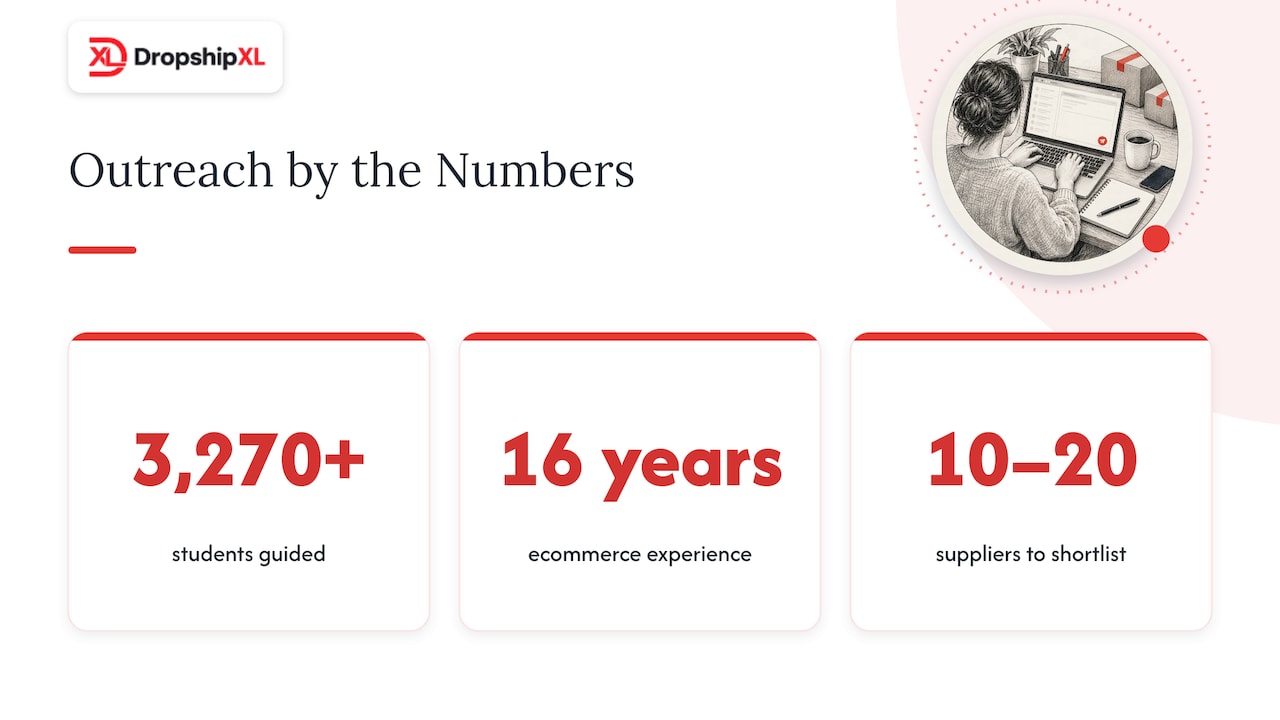
Here’s what I’d tell you if we were on a call. Don’t aim for one perfect supplier. Build a shortlist of 10 to 20, send the same strong email to each, and let the replies teach you. You’ll learn quickly which suppliers answer in hours, which ask thoughtful questions, and which treat you like a number. Those early reactions tell you what the relationship will feel like when you have real customers and real problems.
Also, protect your margins from day one. Ask about MAP policies, shipping costs and handling time before you fall in love with a product. A supplier with a beautiful catalog and slow, expensive shipping will cost you more in refunds and chargebacks than any ad campaign.
— Trent
Where to go next: vetting what comes back
Replies are only half the work. Once you’ve got price lists and terms, compare suppliers side by side: price per unit, shipping, handling time, return handling and communication quality. Our guide on how to find a dropshipping supplier in 2026 walks through that evaluation, and if you’re in a specific category, the example in 6 steps to vet U.S. watch dropship suppliers shows the vetting process applied to one niche.
If you’re also deciding where your store will live, it helps to select an ecommerce platform for dropshipping that supports the product feeds and order automation suppliers offer. And once outreach is running, AI tools can speed up drafting and tracking as long as you keep every email personal and specific.
Want a hand with supplier approval and store setup?
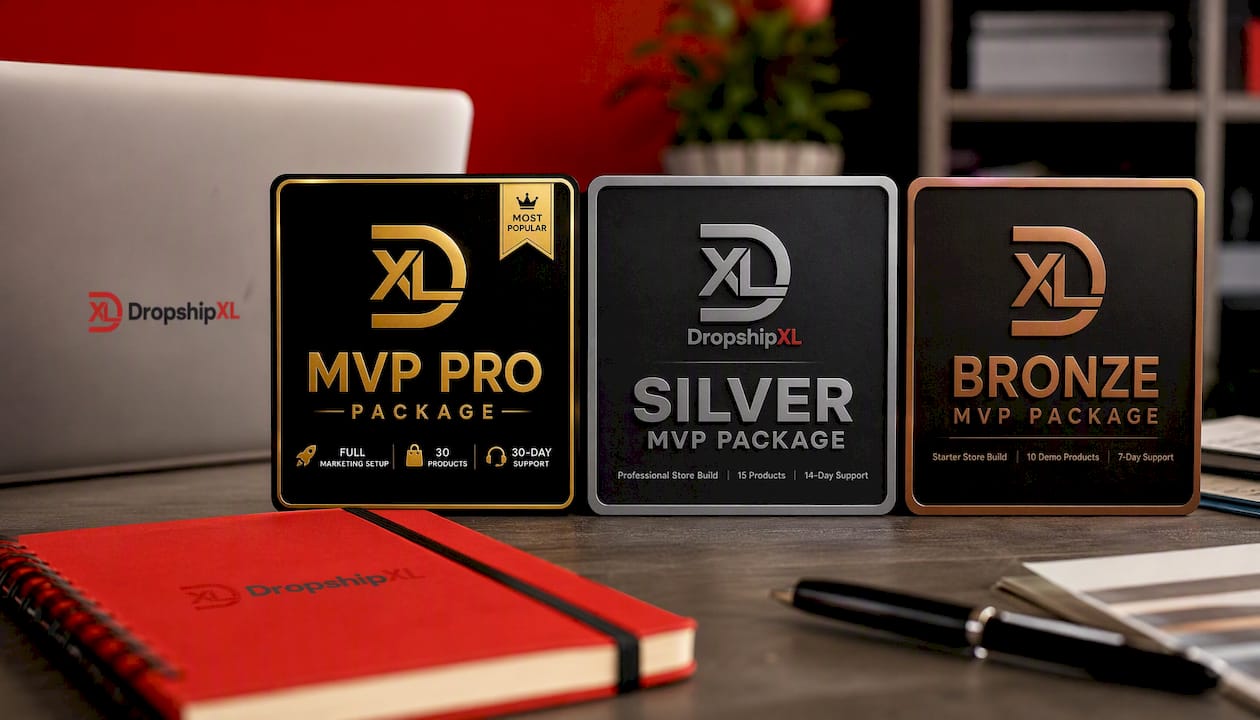
Writing the email is one thing. Getting approved, building a store that looks credible to suppliers, and launching with a plan is another. Inside the DropshipXL Academy Membership ($997 per year), you get our structured 7-step curriculum, supplier resources and ongoing support. If you’d rather talk through your situation, 1-on-1 dropship mentoring is available too. And if you want the store itself built for you, our done-for-you design packages start with the Bronze MVP Package at $1,297, with Silver at $1,997 and MVP PRO at $2,897.
FAQ
How long should a supplier outreach email be?
Aim for 100 to 150 words. Include who you are, the product line that interested you, and three to five numbered questions. Short emails are easy to answer, and a quick answer is what you want.
Should I say I’m new to dropshipping?
You don’t need to volunteer it. Lead with your store, your niche and your plan, and be honest if the supplier asks. Confidence and specificity show you’re serious, and you can always ask for guidance on their account process.
When should I follow up if a supplier doesn’t reply?
About five business days after your first email, a short follow-up referencing your original message is a reasonable standard. If you still hear nothing, try the phone number on their site or a LinkedIn message to the wholesale contact, then send one last note around day 20.
What documents will suppliers ask for?
Many U.S. suppliers ask for a business name, a website, and a sales tax ID or resale certificate to open a dealer account. Requirements differ by supplier and state, so ask in your first email what they need and have the paperwork ready.
Can I use the same email for every supplier?
Use the same structure, but change the greeting, the product reference and the reason you chose them. That one personalized line is what separates your message from a mass email.

A great resource for entrepreneurs who are looking to build strong relationships with suppliers. Effective communication, asking the right questions, and clearly understanding supplier requirements can make the sourcing process much smoother. Finding reliable business partners and having access to practical solutions are equally important for long-term growth.