
Building an email list for your dropshipping store is one of the highest-leverage moves I ever teach my students, because it is the one audience that cannot get taken away by a platform change or an algorithm shift.
This article walks you through the full system I use. One focused lead magnet, well-placed signup forms, a dedicated landing page, a welcome email that fires right away, a short onboarding sequence, and the small weekly habits that keep your list healthy over time. You will see where to place forms, how to time pop-ups so they do not annoy anyone, which metrics to track, and how to stay compliant from day one.
Napoleon Hill said it in one sentence I have my students write at the top of their notebook.
“Patience, persistence, and perspiration make an unbeatable combination for success.” — Napoleon Hill
That is the whole list-building game in one sentence. The dropshippers I have mentored into real email revenue did not get there with a clever one-time launch. They got there by publishing a magnet, pointing a page at it, writing a welcome email, and improving one small thing every week for a year. My dropshipping content marketing guide, my repeat buyers breakdown, and my first-sale fast guide all pair with the system below.
How to create a lead magnet people actually want
Your lead magnet is the reason someone hands over an email address. The mistake I see most often is making it too big. A long ebook feels impressive, but most readers never finish it, and you can spend weeks producing one. Pick one urgent problem and solve only that.
The formats that convert best for beginners are short and usable right now.
- Checklist. “The product page checklist before you launch.”
- Cheat sheet. A one-page reference your reader can pin above their desk.
- Template. A supplier outreach email they can copy, paste, and send today.
- Short video. A brief walkthrough that delivers one clear win.
For aspiring dropshippers, think about the questions you wish someone had answered in your first week. “How to vet a supplier” or “Niche research worksheet” beats a vague “Dropshipping tips” signup every time. My supplier vetting checklist, my niche validation steps, and my product page optimization guide are all the exact kind of specific, one-problem content that works as a magnet.
Ship a first version quickly. Outline the content, build the template, and set up a simple delivery page that releases the file after signup. Ask for the email address only. You can collect names, interests, and other details later through progressive profiling, which means asking one extra question in later emails instead of a long form at the start.
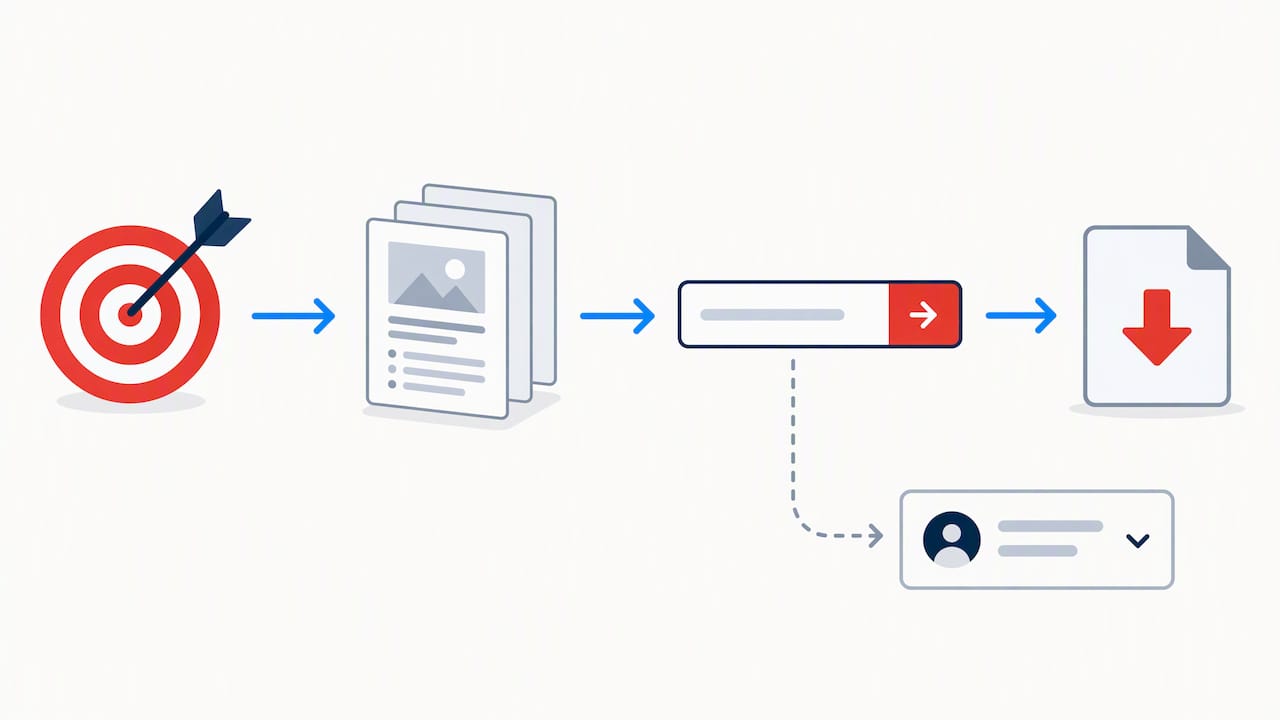
Mentor Tip. I have my students post the title of a lead magnet in a community or on social media before they build the file. If nobody cares about the title, the file will not fix it, and you just saved yourself a week of writing.
Where signup forms go and what they should say
Forms work best when they show up at the moment someone is already interested. Start with these priority placements.
- Announcement bar or header. Visible on every page without blocking content.
- Blog CTAs. A short mid-post invitation tied to the topic.
- End of post. Readers who finish an article are your warmest visitors.
- Checkout. A clear opt-in box for shoppers who are already engaged.
- Footer. A quiet, permanent catch-all.
Match the wording to the page. A visitor reading about supplier vetting will respond to “Get the supplier checklist,” not a generic “Subscribe to our newsletter.” Content-matched calls to action beat one-size-fits-all asks, because the visitor sees a next step tied to the problem they came to solve. My store design guide and my trust badges guide both cover where these forms sit cleanly on a store page.
Keep the form short. Email only is a strong starting point, and asking for fewer details makes signup easier. Use a benefit-led button such as “Send me the checklist” instead of “Submit.”
Once forms are live, test one change at a time. CTA button text. Form length (email only versus email plus first name). Button color and contrast. Placement on the page. Run each test long enough to see a clear difference, then keep the winner and move to the next variable. If a test is a tie, the simpler version wins. My conversion tracking guide walks through how to measure these form tests on a Shopify or WooCommerce store.
How to use pop-ups and exit-intent forms without annoying anyone
Pop-ups have a bad reputation because most are badly timed. Done well, they capture signups from visitors who were about to leave empty-handed. The rules are simple.
- Desktop. Use exit-intent, which triggers when the cursor moves toward the browser’s close button or tabs.
- Content pages. Use a scroll trigger or a time delay so the visitor has seen some value first.
- Mobile. Limit frequency and keep the pop-up easy to dismiss.
- Offer fit. Tie the pop-up to the page. A visitor on a supplier article should see the supplier checklist, not a generic subscribe box.
- Design. One headline, one benefit, one field, one clear close button.
Never show the same pop-up to the same visitor on every page view. Once they have dismissed it, give them a break.
Mentor Tip. I have my students compare engagement before and after they add a pop-up. If signups rise but time on page or return visits drop, the timing is too aggressive. Delay the trigger by 15 seconds and test again.
What makes a landing page convert signups
A landing page has one job. Get the visitor to sign up for one offer. Build one page per lead magnet or topic, and strip out everything that pulls attention elsewhere, including the main navigation menu.
A reliable layout looks like this.
- Headline. State the outcome in plain words (“Vet a supplier with confidence”).
- Benefit bullets. Three short lines on what they get.
- Proof. A testimonial, a subscriber count you can truthfully claim, or a brief note on who made it.
- Form and button. Email only, with a button that repeats the benefit.
Test your hero CTA wording and your one-sentence value proposition first, since those two shape the first impression. For paid traffic, guest posts, and podcast mentions, build a topic-specific page so the message the visitor clicked matches the message they land on. The match between the promise and the page is almost always where conversions are won or lost. My one-product store guide and my successful dropshipping store examples show how good landing-page structure translates to real conversions.
How to actually get traffic to your signup offer
A great offer with no traffic goes nowhere. Here is the order I have my students work in.
- Fix your social profiles. Put the landing page link in your bio, pin a post that explains the offer, and use link-in-bio on every platform.
- Pitch guest posts. Offer the host one useful takeaway their readers can apply immediately, then point to the magnet in your author bio.
- Appear on podcasts. Share one practical idea and mention the resource that goes deeper.
- Join communities and add value first. Answer questions for a few weeks, then share your resource only when it directly answers someone’s problem.
- Repurpose your best content. Turn a high-performing article into short posts and comments that lead back to the signup page.
My traffic playbook, my organic traffic guide, my dropshipping SEO guide, my TikTok marketing guide, my guide to going viral, and my influencer marketing guide all expand each of those traffic channels in depth.
How events and webinars grow your list faster than articles alone
A live session gives people a reason to register right now, and registration is a signup. Keep the event focused on one teachable outcome, such as “Find your first winning niche in 45 minutes,” and collect the email at registration.
Low-prep formats work fine for beginners.
- Short live demo. Show one process on screen from start to finish.
- Q and A session. Answer questions live from your audience.
- Case-study breakdown. Walk through a real store or campaign and explain each decision.
Right after the event, send the replay and a related resource, then follow with a short email sequence. Then reuse the recording as a lead magnet. Attendees who missed it can sign up to watch, and your list keeps growing long after the live date. My dropshipping launch checklist walks through where webinars fit inside your first 60 days.
How referral programs turn happy subscribers into recruiters
A referral loop asks your happy subscribers to bring friends. Keep the mechanics simple.
- One-click sharing. A forward-to-friend link or a personal referral URL inside each email.
- Two-sided rewards. Give something to the referrer and the new subscriber.
- Low-cost incentives. Exclusive content, early access to new resources, or a small gift card.
- Smart timing. Mention the program in your welcome series and after high-engagement moments.
- Fraud checks. Watch for repeated signups from the same source and track which referral link each new subscriber used.
Start with a single reward you can afford to give to everyone, then adjust once you see how many people take part. My affiliate marketing guide covers the mechanics side if you want to scale this into a real affiliate program later.
What your welcome email and onboarding sequence need to do
The welcome email is the most important message your list ever receives, so use it well. Send the first one immediately after signup. Then follow with a short sequence of messages over the coming days.
Each message in the series should do a clear job.
- Message one. Thank them and deliver the promised resource.
- Message two. Link to some of your best content.
- Message three. Share social proof or a short story.
- Message four. Make one clear ask, such as a reply, a click, or a first purchase.
Segment by signup source from the start. Someone who joined through your supplier checklist should hear about suppliers first, not about a blog post on a different topic. Welcome emails routinely clear 50 percent open rates and 20 to 45 percent click-through rates, far stronger than any standard broadcast, so this is the first automation to build. My dropship automation guide and my batch task guide both show how to set up and maintain this sequence without burning your evenings.
Which metrics actually matter and how to keep your list healthy
Beginners can track a few numbers and learn a lot about their list. The formula for list growth rate is simple. New subscribers minus churn, divided by list size, times 100.
| Metric | What it tells you | Benchmark to watch |
|---|---|---|
| List growth rate | Net subscribers gained versus lost | About 2.5 percent net growth monthly |
| Bounce rate | Share of emails that cannot be delivered | Under 2 percent |
| Unsubscribe rate | Share of people opting out per send | Monitor the trend over 3 months |
Hygiene is a routine, not a one-time cleanup. Remove hard bounces promptly, and reach out to cold subscribers once before you suppress them. Consider running a verification tool if your list came from forms with typo-prone entries. Double opt-in, where a new subscriber confirms by clicking a link, is not legally required in the US, but it is the gold standard for filtering out bots and typos and protecting your sender reputation.
Authenticate your sending domain with SPF, DKIM, and DMARC, and increase send volume gradually when you are new.
Then there is the law. US commercial email has to carry a working unsubscribe mechanism, accurate header information, and a valid postal address, and opt-out requests must be honored promptly. You cannot dodge these duties by labeling messages as relationship or membership emails. My ecommerce metrics guide and my profit calculator guide both tie list health back to the revenue numbers that matter most.
Mentor Tip. I have my students set a monthly reminder to check these three numbers on the same day every month. Trends over 3 to 6 months tell you more than any single send ever will.
How to pick the right email tools as a beginner
Pick tools by the jobs they do, not by the logo. Before you commit, run any platform through this checklist.
- Forms and landing pages. Can you build both without a developer?
- Automation. Does it support a welcome series and trigger-based flows?
- Segmentation. Can you tag subscribers by signup source or interest?
- Analytics. Can you see growth, bounces, and unsubscribes clearly?
- Deliverability support. Does it help you set up SPF, DKIM, and DMARC?
- Integrations. Does it connect to your site through a plugin or native connector, capture emails at checkout, and work with Zapier or an open API?
Add a list-cleaning service or deliverability monitor later, once your list is large enough that bounces start to matter. My AI design guide and my customer support outsourcing guide both show how these email tools fit alongside the other systems a dropship store needs.
How to segment your list for sharper campaigns
Segmentation means sending different messages to different groups, and it is easier than it sounds. You do not need a data team. Start with the information you already have and add layers as your list grows.
Good first segments for a beginner.
- Signup source. Which lead magnet or page brought them in.
- Interest. The topic they clicked on most in your first few emails.
- Behavior. Buyers versus browsers, and openers versus non-openers.
- Stage. Brand-new subscribers versus people who have been on your list for months.
Here is how it plays out in practice. Say you run two lead magnets, a supplier checklist and a product page template. Anyone who downloaded the checklist gets a welcome sequence about sourcing. Anyone who downloaded the template hears about page design first. Each group receives something relevant to the reason they joined, which keeps opens and clicks up and unsubscribes down.
Use tags to make this simple. Add a tag when someone signs up through a specific form, clicks a particular link, or buys. Then build segments from those tags instead of trying to guess. Keep it manageable. A few segments you actually use beat a long list you never send to. My upsells and cross-sells guide shows how to pair these segments with buyer-side offers.
How to prevent list fatigue and keep subscribers engaged
List fatigue happens when subscribers stop caring. They still sit on your list, but they ignore every email, and a growing pile of ignored email hurts your deliverability. The fix is to stay useful.
- Set expectations early. Tell people in your welcome email how often you will write and what you will cover, then stick to it.
- Lead with value. Aim for several helpful emails for every promotional one.
- Vary the format. Mix short tips, stories, quick walkthroughs, and the occasional offer.
- Write like a person. A real sender name and a conversational tone beat a corporate newsletter voice.
- Ask for replies. A simple question invites a response, and replies signal to inbox providers that your mail is wanted.
- Send less when you have less to say. One strong email a week beats three weak ones.
Watch your unsubscribe rate and your click trends together. A sudden jump in unsubscribes after a change in frequency or topic tells you exactly what to undo. The industry is also shifting its measuring stick toward revenue-per-subscriber, churn, and lifetime value instead of raw open rates. That is good news for you. Instead of chasing opens, ask whether each email gives the reader a reason to stay. Give subscribers control too. A preference page where people choose topics or frequency keeps many readers on your list who would otherwise leave entirely. My repeat buyers breakdown expands the lifetime-value angle in detail.
How to re-engage inactive subscribers before you remove them
Every list has people who stopped opening. Before you delete them, give them one honest chance to come back. A short re-engagement sequence does the job.
First, define “inactive” for your business. A common starting point is no opens or clicks across your recent sends, but choose a window that fits how often you email.
Then run a three-step sequence.
- The check-in. A friendly subject line and a simple message. “We’ve missed you. Still want these emails?” Include your best recent resource.
- The value reminder. Show your three most popular pieces of content, or offer a fresh lead magnet as a thank-you for staying.
- The final notice. Be direct. Tell them you will stop sending unless they click to stay.
Anyone who does not respond should be suppressed, not kept forever. A smaller, engaged list beats a large, silent one, because silent contacts drag down your engagement numbers and push your emails toward the spam folder. Other quick tactics. Try a different send time for sleepy segments, change your subject line style, or ask a one-question survey about what they would like to read.
Realistic list-growth goals for a new dropshipping store
Growth is rarely a straight line. Most beginners see a slow first month, a modest rise as they add forms and promote their page, and then bigger jumps once they find a channel that works. Expect that shape instead of an overnight spike.
Use the earlier benchmark as a sanity check. Net growth around 2.5 percent monthly is a strong target. On a tiny list, that percentage means only a handful of new people, so early on, set goals in absolute numbers you control rather than comparing yourself to big brands.
A practical goal-setting rhythm.
- Week 1. Publish your lead magnet, a landing page, and a form on your site.
- Week 2. Send traffic to the page and turn on your welcome email.
- Week 3 to 4. Add another placement or pop-up, and run an A/B test.
- Month 2 and beyond. Add another traffic source and review your metrics.
At each checkpoint, ask three questions. Which source brought the most signups? Which of those subscribers opened the welcome email? Which test produced a clear winner? Double down on the answers. My scaling strategies guide covers what comes after you have a repeatable list-growth system working.
How DropshipXL helps you turn a list into real sales
Building a list is one piece of the system I teach. The reason it works is that the list sits inside a seven-step process covering niche selection, supplier sourcing, store setup, marketing validation, and scaling, with the email layer feeding the whole thing.

- MVP PRO Dropship Design Package. A done-for-you store build priced at 2,897 dollars one-off, including the landing page and form setup your list capture needs.
- DropshipXL Academy Membership. 997 dollars per year, with the full seven-step curriculum and the list-building workflows I have my students run.
- DFY Focus 1 and Mentoring package. A lighter 697-dollar entry point for a single high-converting page with direct guidance.
- Free 30-minute dropship mentoring call. Walk through your list, your store, and your next move together before you commit to anything.
FAQ
Can you build an email list for free
Yes. Free tiers of many email platforms let you create forms, send a welcome email, and collect your first subscribers at no cost. Your real investment is time spent creating a lead magnet and promoting it on social media, in communities, and through guest posts.
How do you grow your email list fast
Combine one targeted lead magnet with a dedicated landing page and a visible form on your highest-traffic pages, then promote that page through the channels where your audience already spends time. Quality matters more than speed, so keep your offer specific to one problem.
How much is a 1,000 email list actually worth
It depends on engagement, not size alone. List value is judged by revenue per subscriber, churn, and lifetime value, not raw counts. A responsive list that matches your offer can outperform a much larger list that never opens your emails.
Is double opt-in required
Not in the US, but it helps protect your sender reputation by screening out typos and bots. You still have to follow commercial-email rules, including a working unsubscribe link and a valid postal address in every message.

Here are 4 other ways I can help you when you're ready: