
This article walks you through the exact email marketing system I set up for every dropshipping student I mentor. Three automated flows built in a specific order. A welcome series, an abandoned cart sequence, and a post-purchase sequence. You will see what each email should do, when it should fire, how to collect subscribers without being pushy, how to stay compliant with US email rules, and a 7-day plan to get everything live. By the end you will have the one marketing channel that cannot get taken away by a platform change or an ad account suspension.
Michael Rubin put it in a line I have my students write at the top of every new flow.
“I think relationships are the most important thing. You have to connect with people.” — Michael Rubin
Email is a relationship channel first and a revenue channel second. The dropshippers who win with email are the ones who treat every message as a chance to reduce a buyer’s anxiety, answer a real question, or earn trust in the gap between order and delivery. I have mentored more than 3,270 students across 17 years of ecommerce, and the stores with real retention are almost never the ones with the cleverest newsletter. They are the ones running the boring post-purchase sequence that actually fires. My dropshipping content marketing guide, my repeat buyers breakdown, and my first-sale fast guide all pair with the system below.
Why email matters more for dropshippers than for other store types
Paid traffic is rented. The day you stop paying for ads, the visitors stop coming. An email list is the one audience you own, and it lets you sell to the same person again without paying for the click a second time.
Dropshipping adds a second reason. Your customer orders from a brand they have never heard of, and then waits days or weeks for a package that ships from a supplier’s warehouse. That gap is where refund requests, chargebacks, and angry messages are born. Consistent communication during that gap is what keeps a first-time buyer from turning into a dispute. My chargebacks guide, my returns address guide, and my faster shipping guide all cover the trust side that email supports.
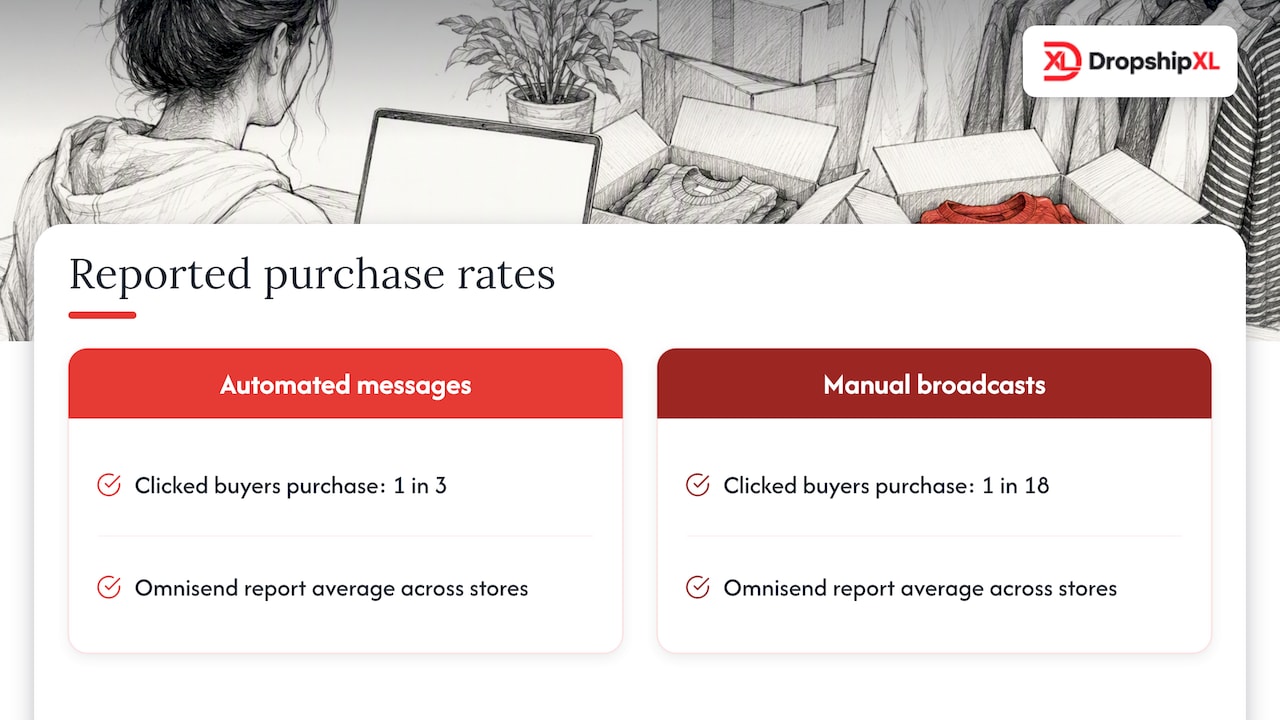
The numbers back up how well automation works. Across many dropship and ecommerce stores in 2025, automated emails made up roughly 2 percent of total send volume but produced about 37 percent of email-attributed revenue, and roughly 1 in 3 clicks on an automated message turned into a purchase, versus about 1 in 18 on a manual broadcast. These are averages across many stores, not a promise for yours, but the direction is clear. Set up the automations first.
The 3 email flows to build before you touch a newsletter
If you only have a weekend, build these three, in this order. Each one is a short sequence that runs on its own once a trigger fires.
| Flow | Trigger | Job | Typical length |
|---|---|---|---|
| Welcome series | Someone joins your list | Introduce the brand, deliver the incentive, earn the first order | 3 to 4 emails over about a week |
| Abandoned cart | Cart started, no checkout | Remove friction and bring the shopper back | 2 to 3 emails over 3 days |
| Post-purchase | Order placed | Set expectations, reduce anxiety, earn reviews and repeat orders | 4 to 6 emails across shipping and delivery |
The timings in that table are starting points I use with students, not industry rules. Test them against your own store’s data once you have orders.
Flow 1. A welcome series that earns the first order
A welcome email is the one message people actually expect, so it gets attention. Use it well.
- Email 1, immediately. Deliver whatever you promised at signup (a discount code, a guide, early access). Say who you are and what the store stands for in 2 or 3 sentences.
- Email 2, day 2. Show your best sellers or the product that solves the problem your niche cares about. Lead with the problem, not the product.
- Email 3, day 4. Social proof and policies. Reviews, your shipping timeframe, your return policy. Be upfront about delivery times here, since surprises later cost you.
- Email 4, day 7. A gentle reminder that the incentive expires, if you offered one.
If you are still choosing what to sell, a focused store makes every email easier to write. My niche dropshipping store breakdown, my successful store examples, and my dropshipping business plan guide show what a focused store setup looks like.
Flow 2. An abandoned cart sequence that recovers the sale
Most shoppers who add to cart do not buy on the first visit. That is normal, and it is your opportunity.
- Email 1, about an hour later. Helpful and plain. Remind them what is in the cart, link straight back to it, and answer the likely objection (shipping time, returns, sizing).
- Email 2, next day. Reviews and your guarantee. No discount yet if you can avoid it.
- Email 3, day 3. Last reminder. This is the place to test a small incentive such as free shipping, if your margins allow it.
Margins are the catch. A discount that wipes out your profit is just a more expensive way to lose money, so run the numbers first with my dropshipping profit calculator guide before you give anything away. My conversion tracking guide and my product page optimization guide both cover why abandonment happens in the first place and how to lower it before you ever write the email.
Flow 3. A post-purchase sequence that protects your reputation
This is the flow most beginners skip, and the one that matters most in dropshipping. People search for a post-purchase email sequence because it is where retention starts, and where you protect your reputation.
Here is a simple version.
- Order confirmation, instantly. Thank them, restate what they bought, and set a realistic delivery window. Honest beats optimistic.
- Processing update, day 1 to 2. Tell them the order is with the supplier and being prepared.
- Shipping notification with tracking. Send it the moment the supplier gives you a tracking number. Explain that tracking can take a day or two to update after the first scan.
- In-transit check-in, only if delivery runs long. If a package is late, tell the customer before they ask. A short, honest message prevents most angry replies.
- Delivery follow-up, a few days after delivery. Ask whether everything arrived as expected and give them an easy way to reach you.
- Review request, about a week after delivery. Ask once, make it one click, and thank them.
- Cross-sell, a couple of weeks later. Recommend a complementary product based on what they bought.
Notice the first 5 emails do not sell anything. They exist to build trust. The sales come after trust is in place. My upsells and cross-sells guide, my customer support outsourcing guide, and my trust badges guide all cover the post-purchase experience that sits around these emails.
How to set up your list the right way from day one
How to collect emails without being pushy
A simple pop-up with a clear incentive, plus a signup field at checkout, covers most of what a new store needs. Offer something relevant to your niche. A discount works, but a useful guide, a size chart, or a buying checklist often attracts better-quality subscribers.
Why you should never buy an email list
Purchased lists get you flagged and can get your account suspended. Grow your list with people who asked to hear from you. My dropshipping legality guide and my ecommerce fraud prevention guide both cover the compliance side.
How to keep the list clean so you land in the inbox
Subscribers who never open or click hurt your sender reputation, and reputation decides whether you land in the inbox or the spam folder. Suppress subscribers who have not engaged in roughly 60 to 90 days. Most email platforms can do this automatically. A smaller, engaged list beats a big, ignored one.
Mentor Tip. I have my students schedule one Sunday every quarter to run a list cleanup. 15 minutes of suppressing cold subscribers protects the deliverability you have earned on the engaged ones, and skipping it is what quietly drops your open rates over 6 to 12 months.
How to pick an email tool without overthinking it
When students ask about the best platform for email flows, here is what I tell them. Pick a tool that.
- Connects directly to your store so it sees carts, orders, and tracking data.
- Offers prebuilt flow templates you can edit rather than build from scratch.
- Lets you segment by behavior, such as bought or did not buy.
- Has pricing that fits your list size today, since cost rises as your list grows.
The tool matters far less than the flows. A basic setup with all three flows running will beat an expensive one with none. If you are still deciding on your store setup, my guide to picking an ecommerce platform and my store design conversion guide cover what to check, including how well your platform connects with email tools.
How to stay on the right side of US email rules
If you sell to people in the United States, the law applies to you. Commercial emails need a valid physical postal address and a clear, prompt way to opt out. Each separate email that violates the rules can carry a significant penalty, and you remain responsible for emails sent on your behalf even if someone else handles your marketing.
Practical checklist.
- Put your business mailing address in every footer.
- Include a visible unsubscribe link and honor requests promptly.
- Keep subject lines honest. No fake “Re:” tricks or misleading claims.
- Identify marketing emails as what they are.
Order confirmations and shipping updates are transactional, but anything with promotion in it should be treated as commercial. When in doubt, include the footer. My launch checklist covers the first-week compliance moves alongside your flow setup.
How email fits into an automated store that runs while you sleep
The whole point of flows is that they work while you do something else. That is also why they fit the low-effort model many of my students want. My dropship automation guide, my low-maintenance dropshipping models guide, and my batch task guide all pair with this. Email is one of the few channels where one afternoon of setup keeps paying off for months.
Once your flows convert, scaling gets easier because each paid visitor is worth more. My grow from zero to profit guide, my scaling strategies guide, and my scaling walkthrough show the full growth path once email is pulling its weight.
How to measure the email numbers that actually matter
Do not drown in dashboards. Watch these numbers.
- Revenue per recipient for each flow. This tells you which flow is earning its keep.
- Click rate more than open rate. Privacy features on many email apps inflate opens, so clicks are a more honest signal.
- Unsubscribe and spam complaint rates. If they climb, your emails or your list quality need work.
- Email ROI. Subtract your total email costs from the revenue email generated, divide by those costs, then multiply by 100.
Change one thing at a time, such as a subject line or a send delay, and give it enough orders to mean something before you decide it worked.
Mentor Tip. I have my students pick one flow metric and watch it weekly for 90 days. Pick revenue per recipient on the welcome series, or recovered revenue on the abandoned cart. One number watched consistently beats a dashboard of 15 numbers watched sporadically.
Why I tell every student to build the flows before anything else
I have mentored more than 3,270 students, and the pattern is consistent. The sellers who stall are rarely missing a clever trick. They are missing a system. They chase new products and new ad ideas while the customers they already paid for never hear from them again.
I teach email inside the same seven-step process I use to build and scale my own ecommerce brand. By the time a student is ready for email, they have a niche, approved suppliers, and a store. Then the flows turn those first orders into reviews, repeat buyers, and a customer base that does not depend on ad spend alone. My TikTok marketing guide, my Facebook ads guide, and my influencer marketing guide all become more profitable the moment your email flows are working, because the second sale is where most dropship businesses actually make money.
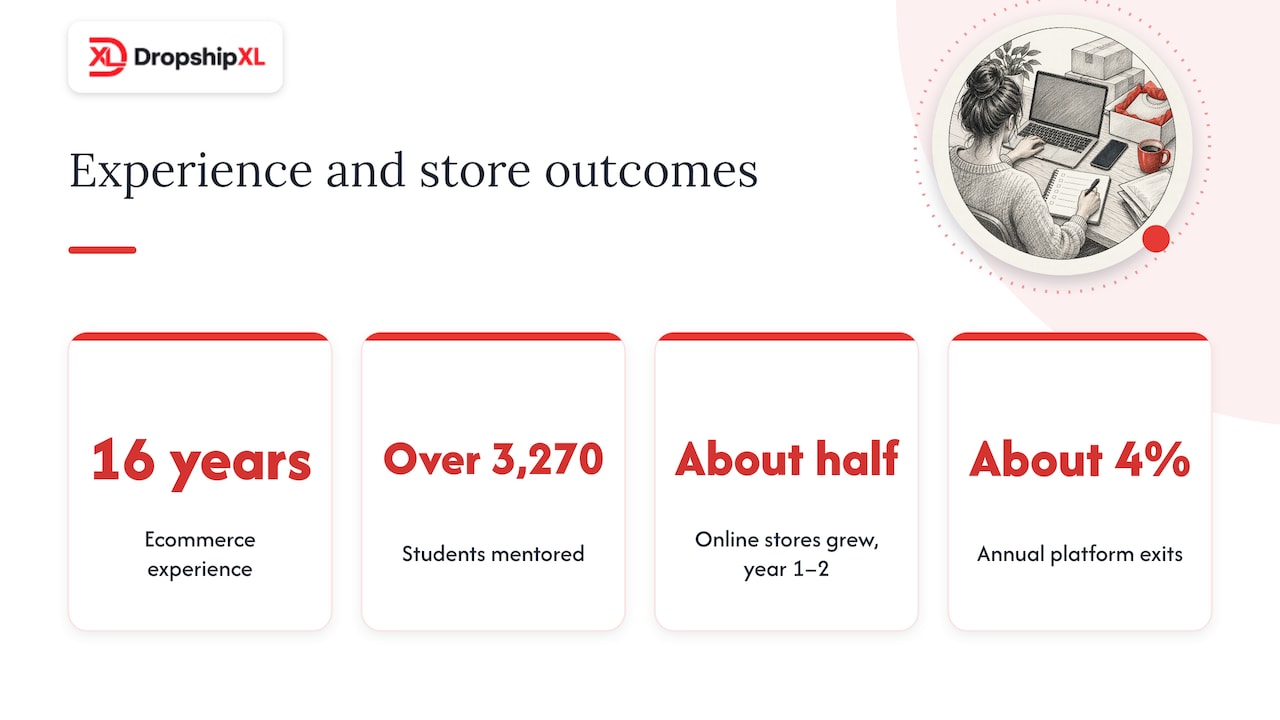
One caution on expectations. Results vary a lot by niche, margin, offer, and effort, and no email flow guarantees income. Earnings claims must be truthful and substantiated, and I hold myself to that. Even on the data side, the picture is more encouraging than the “most dropshippers fail” headlines suggest. Independent research on online stores has found that about half grow between their first and second years, and only a small single-digit share leave the platform each year. Discipline and margins decide the outcome, and email is part of the discipline. My affiliate marketing guide covers one of the ways email revenue compounds once your list is active.
How DropshipXL helps you build the store and the flows together
If you would rather not figure this out alone, my DropshipXL Academy Membership is 997 dollars per year and walks you through the full seven-step process, with supplier resources and ongoing support. If you want personal guidance on your own store, book a free 30-minute dropship mentoring call.
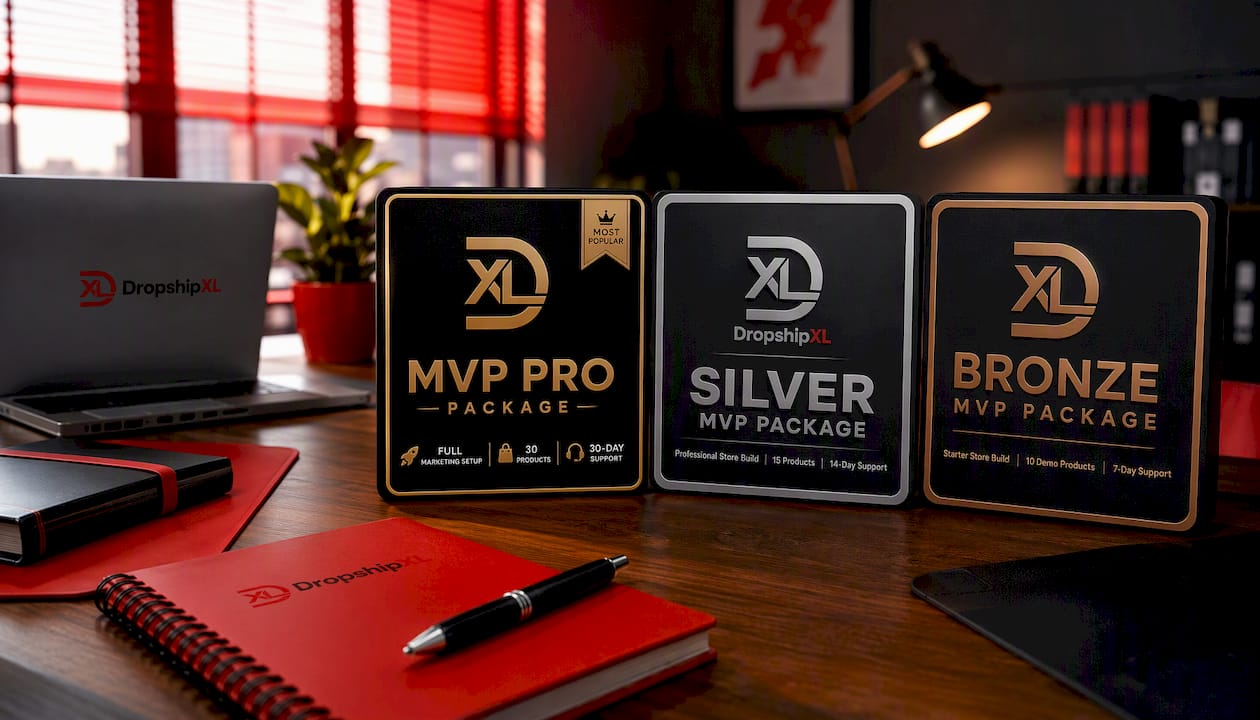
- MVP PRO Dropship Design Package. A done-for-you store built around a validated product, 2,897 dollars one-off.
- DFY Focus 1 and Mentoring package. A lighter 697-dollar starting point for a single high-converting page with direct guidance.
- Ongoing 1-on-1 dropship mentoring. Personal guidance for sellers who want hands-on help.
Your first week of email, step by step
Here is a simple plan to get moving.
- Day 1. Choose your email tool and connect your store.
- Day 2. Add a signup pop-up and a checkout opt-in. Write your footer with your address and unsubscribe link.
- Day 3. Build the welcome series from the outline above.
- Day 4. Build the abandoned cart sequence.
- Day 5. Build the post-purchase sequence, starting with confirmation and tracking.
- Day 6. Place a test order and check every email, link, and mobile layout.
- Day 7. Turn the flows on, then check your numbers weekly.
That is it. Done is better than perfect, because you can improve a live flow with real data, and you cannot improve one you never launched.
FAQ
Does email marketing actually work for dropshipping
Yes, especially automated flows. Across the dropship and ecommerce stores I see, automated emails routinely produce the large majority of email revenue from a small fraction of total sends. Results depend on your product, margins, and list quality, so treat the figure as a benchmark, not a guarantee.
Which email flows should a dropshipping store set up first
Start with a welcome series, an abandoned cart sequence, and a post-purchase sequence. They cover new subscribers, shoppers who left, and customers waiting on delivery. Add review requests, cross-sells, and win-back emails once those three are running.
How many subscribers do I need before email is worth doing
You can start with none. Flows trigger one person at a time, so the first customer who abandons a cart or places an order is already worth emailing. Focus on collecting addresses from day one and the list grows with your traffic.
Do I actually have to follow US email rules if I dropship
If you send commercial email to people in the US, yes. You need a valid physical postal address and a clear opt-out in your messages, and you are responsible even when a third party sends for you. Check the rules or ask a business attorney about your specific situation.

Here are 4 other ways I can help you when you're ready: