
Facebook ads still work for dropshipping but only when you run them like a profit calculation instead of a popularity contest.
I have my students treat every campaign as a test of three things working together, the product margin, the creative that stops the scroll, and the testing discipline that tells you what to kill and what to scale. Miss one of those three and even a well-funded account will bleed cash long before it builds momentum.
That discipline is why I keep coming back to a line from James Clear. “You do not rise to the level of your goals. You fall to the level of your systems.”
Facebook ads are a system, not a lottery ticket. The dropshippers who win on this platform are the ones who build the system first and let the system tell them when a product deserves more money. That is the frame I want you to carry into every tactic below.
Why Facebook ads still move real buyers for dropshippers in 2026
Meta’s platform still carries two advantages that matter more than almost anything else for a dropshipping store, scale and intent signals. Billions of people scroll Facebook and Instagram every day, and the algorithm learns from purchase events, add-to-cart actions, and engagement patterns to find the people who behave like your buyers. That learning loop is what makes paid social different from a billboard, it gets smarter every time you feed it a real purchase.
For a dropshipping store, Facebook fits naturally into a three-stage funnel. Cold traffic sees a scroll-stopping hook that introduces the product. Warm viewers who clicked or viewed the page see a deeper story, a demo, or social proof. Cart abandoners and past engagers see a direct offer, a bundle, or a short urgency message that closes the sale. Asking cold traffic to buy on the first ad rarely works. Walking people through those three stages is what the system is actually for.
Facebook is not always the right fit. If your margin cannot support a realistic cost per acquisition, or your product needs a long educational cycle better suited to search intent, you may get further with organic content or a channel built on buyer searches. I walked through that trade-off in my Facebook ads vs TikTok ads breakdown and in my Google Ads vs Facebook Ads comparison. For most physical products with a clear visual hook and a reasonable margin, though, Facebook is still one of the most reliable places to start.
The seven core moves that make a dropshipping campaign convert
Here is the order I have my students follow when a new campaign goes live. Each move corrects one of the mistakes that quietly drains ad budgets.
- Optimize for purchases, not clicks. Set your campaign objective to purchase or sales from day one. Optimizing for traffic or engagement teaches Meta to chase cheap clicks instead of buyers.
Realistic payoff. Students who switch from traffic to purchase optimization usually see cost per purchase drop by 30 to 50 percent inside two weeks, even with the same creative and budget. - Test broad or Advantage+ before you over-segment. Automated targeting often finds buyers faster than a stacked interest audience once your pixel has enough purchase data. Run a broad test alongside one manual test and let the data pick the winner.
Realistic payoff. On most new accounts I review, broad or Advantage+ beats manual interest stacking within the first 20 purchases and keeps a 15 to 25 percent lower cost per purchase as the account matures. - Build the full funnel, not just one cold ad. Pair prospecting creative with a retargeting sequence for site visitors and cart abandoners, then layer in a bundle or upsell for past buyers.
Realistic payoff. A proper three-stage funnel typically lifts total account return on ad spend 30 to 60 percent compared to running cold prospecting alone, because the retargeting layer closes buyers you already paid to attract. - Test creatives in batches. Launch three to five distinct creative concepts per test so you get a real read on what resonates instead of guessing from a single variant.
Realistic payoff. One in three to one in five creatives usually becomes a legitimate winner, so a five-creative batch gives you roughly a 60 to 85 percent chance of surfacing at least one profitable ad per test cycle. - Set a clear review window. Judge a creative after it has spent roughly one and a half to two times your break-even cost per acquisition without a sale, not after the first few dollars.
Realistic payoff. This single rule has saved students more winning creatives than any other change, because the ads that end up profitable often look flat on day one and only reveal themselves after the algorithm finishes its learning phase. - Size lookalikes off real buyer events. A 1 percent lookalike built from purchasers mirrors your actual customer much more closely than one built from page viewers or add-to-carts alone.
Realistic payoff. Purchase-based lookalikes typically produce a 20 to 40 percent lower cost per purchase than page-view lookalikes once your pixel holds at least 100 verified sales. - Exclude people you already own. Keep recent purchasers and existing customers out of your cold prospecting so your budget stops paying to re-acquire buyers you already converted.
Realistic payoff. Even a basic 60-day purchaser exclusion usually reclaims 5 to 12 percent of wasted cold spend each month, which goes straight back into finding new buyers.
Mentor Tip. I have my students keep a one-page spreadsheet logging every creative test, its spend, and its cost per purchase. The patterns across 20 or 30 tests teach you more about your buyers than any single winning ad ever could.
The mindset underneath all seven moves is profit-first, not return-on-ad-spend-first. The second you make that shift, every decision in the account gets simpler.
Creative formats that convert cold dropshipping traffic in 2026
Creative is the lever most dropshippers underuse. Format matters less than the hook, but certain formats land hooks faster on a mobile feed.
- Video hooks. Open with the problem or the transformation inside the first one to two seconds. A proven pattern, “Here is why my common complaint disappeared” followed immediately by the product in action.
- Carousels. Use the first card for your boldest benefit, then dedicate the next cards to a demo, a close-up, and a before-and-after shot.
- UGC-style ads. Phone-shot footage with a real person explaining why they like the product tends to outperform polished studio footage for cold traffic.
- Static image ads. A strong product shot with a bold text overlay still works well for retargeting, where the audience already knows the brand.
When a creator receives free product or payment to feature your item, the ad needs plain-language disclosure such as “ad” or “paid partnership” placed where viewers will actually see it, not buried in the caption. That is simply good practice and keeps you clear of policy flags.
A reliable copy pattern for a dropshipping ad reads like this. State the problem. Show the product solving it. Add one short proof point or review line. Close with a clear call to action. For a kitchen gadget, that becomes, “Hook, ‘I used to throw away half my herbs before I found this.’ Demo, 10 seconds of the product in use. Proof, on-screen text showing a real review. CTA, ‘Tap to see it in action.'”
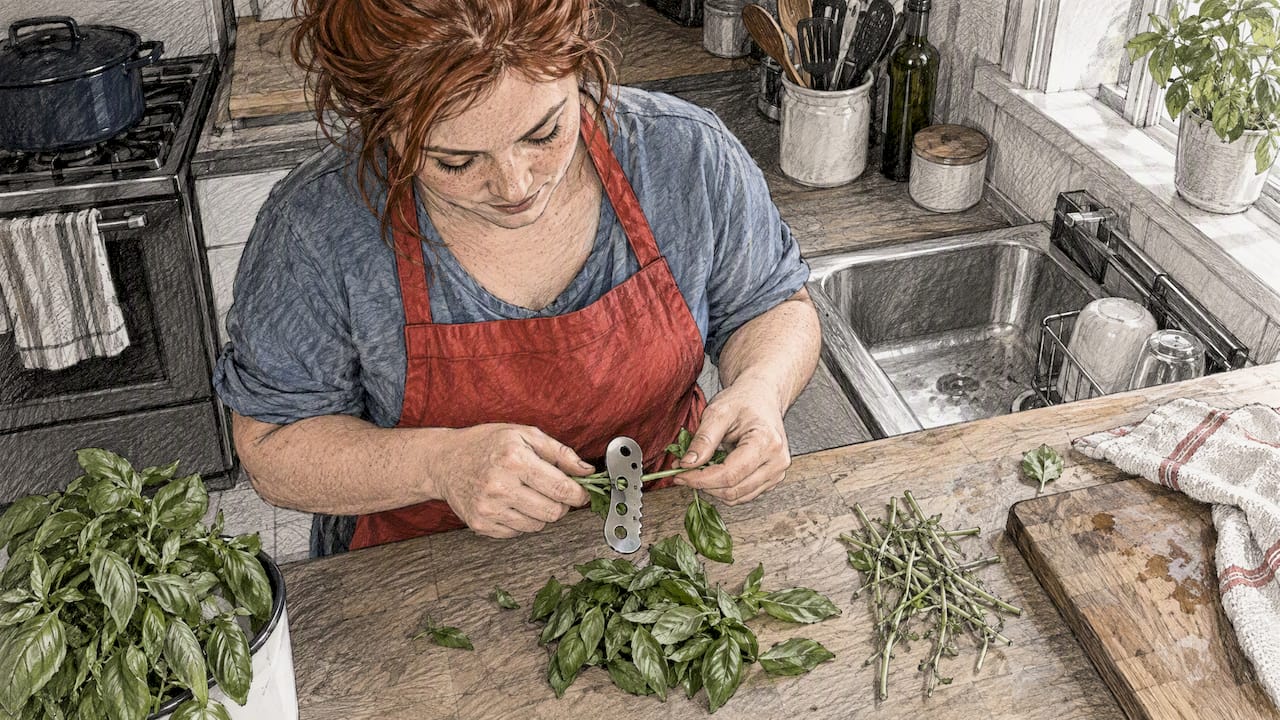
The clearest lesson across every account I have reviewed is that your ad creative and the product itself have to match the landing page. Mismatched expectations between the ad and the product page are one of the fastest ways to tank conversion rates and trigger disapprovals. My product page optimization guide and my trust badges breakdown cover the on-page details that keep that match tight.
How to build audiences that find buyers instead of browsers
Targeting decisions early in a campaign shape everything that follows. Here is how I have my students approach it.
- Start broad or Advantage+ when the pixel is new. With limited purchase data, Meta’s algorithm often finds buyers more efficiently than a hand-stacked interest audience.
- Seed lookalikes from purchase events, not page views. A lookalike built from add-to-cart data can serve as a secondary test, but completed purchases produce the tightest match to your real customer.
- Keep retargeting windows tight for cart abandoners. A 1 to 3 day window for cart abandonment and a 7 to 14 day window for product page viewers captures people while intent is still warm.
- Exclude recent purchasers from prospecting. Keep cold budget focused on new buyers rather than people who already converted.
- Layer interests sparingly. Stacking three or four narrow interests usually shrinks the audience too far. One or two broad interests paired with Advantage+ expansion wins more often.
- Refresh exclusions every month. As your customer list grows, updating exclusions keeps your cold audiences genuinely cold.
Budgeting and testing rules that keep winning creatives alive
Most dropshippers either underfund their tests or scale too aggressively on noisy early data. The cadence that holds up looks like this.
- Set a starter daily budget per ad set that covers one and a half to two times your expected break-even CPA. That gives the algorithm enough spend to find a buyer before you judge the result.
- Run several creatives per test. Comparing real performance across three to five concepts beats reacting to the variance of a single ad.
- Give each test room to breathe. Wait until spend reaches one and a half to two times your break-even CPA without a sale before pausing a creative. Cutting too early kills winners before the algorithm finds its footing.
- Scale winners gradually. Once a creative produces repeat purchases under your target CPA, raise the budget by a moderate percentage every few days rather than doubling it overnight.
- Rotate creatives before fatigue sets in. Climbing frequency and falling click-through rate are early signs that an ad is wearing out. Have the next batch ready to swap in.
My dropshipping scaling strategies guide walks through what to do once a campaign clears these early tests and needs a longer-term growth plan.
Why break-even CPA beats ROAS as your north-star metric
Return on ad spend tells you the ratio of revenue to ad spend, but it does not tell you whether you are actually profitable. It ignores product cost, shipping, payment fees, and refunds. Break-even cost per acquisition answers the question ROAS cannot, how much can you spend to buy a single order and still walk away with profit?
- Calculate it directly. Take your average order value, subtract product cost, shipping, payment processing fees, and an estimate for refunds and reships. What is left is the maximum you can spend per purchase.
- Watch cost per purchase daily. It maps directly to your break-even number in a way ROAS does not.
- Check attribution windows. A shifting attribution setting in Ads Manager can make a campaign look better or worse than it actually is, so keep that setting consistent while you compare periods.
Mentor Tip. If your metrics look strong but your bank balance disagrees, recheck your break-even math first. A detailed walkthrough of the hidden costs lives in my dropshipping profit calculator guide, which is worth bookmarking before your next campaign launch. My Shopify conversion tracking guide is the companion piece that keeps the data flowing in cleanly on the store side.
Compliance moves that keep your dropshipping account out of trouble
A handful of policy checks save dropshippers from wasted spend and account flags.
- Match your ad to your landing page. What you promise in the creative is what visitors need to find on your site.
- Avoid exaggerated or misleading claims. Health, weight loss, and unrealistic result categories face the most scrutiny and the tightest targeting restrictions.
- Disclose paid or gifted creator content clearly. Use plain language such as “ad” or “sponsored” placed where it will be seen.
- Keep landing pages clean and fast. My Meta small-business advertising guide covers the page-level details that reduce bounce and support ad approval.
How the seven-step DropshipXL process plugs Facebook ads into a real business
My seven-step process moves my students from niche selection through supplier sourcing, store setup, marketing validation, and scaling. Facebook ad testing plugs directly into the marketing validation step, where a new store proves demand before committing to a bigger budget. The MVP PRO Dropship Design Package exists specifically to get a store launch-ready before that first ad dollar gets spent, so the paid traffic lands on a page that can actually convert it.
Where Facebook fits inside a multi-channel growth plan
Facebook earns top priority when your product has a strong visual hook and your margin supports real testing. Once a campaign proves profitable, pair it with email flows and retention offers to stretch the value of each buyer rather than chasing cold traffic forever. If results stay flat after a genuine testing cycle, compare notes against Google Ads, organic search, and influencer marketing before you assume paid social has failed you.
How DropshipXL can help you launch the full system
Building the funnel, creative, and tracking I covered above takes real time, and I built my programs so my students do not have to piece it together alone. My MVP PRO Dropship Design Package gets your store built and ready for traffic, and it pairs naturally with ad testing once your product pages are live.
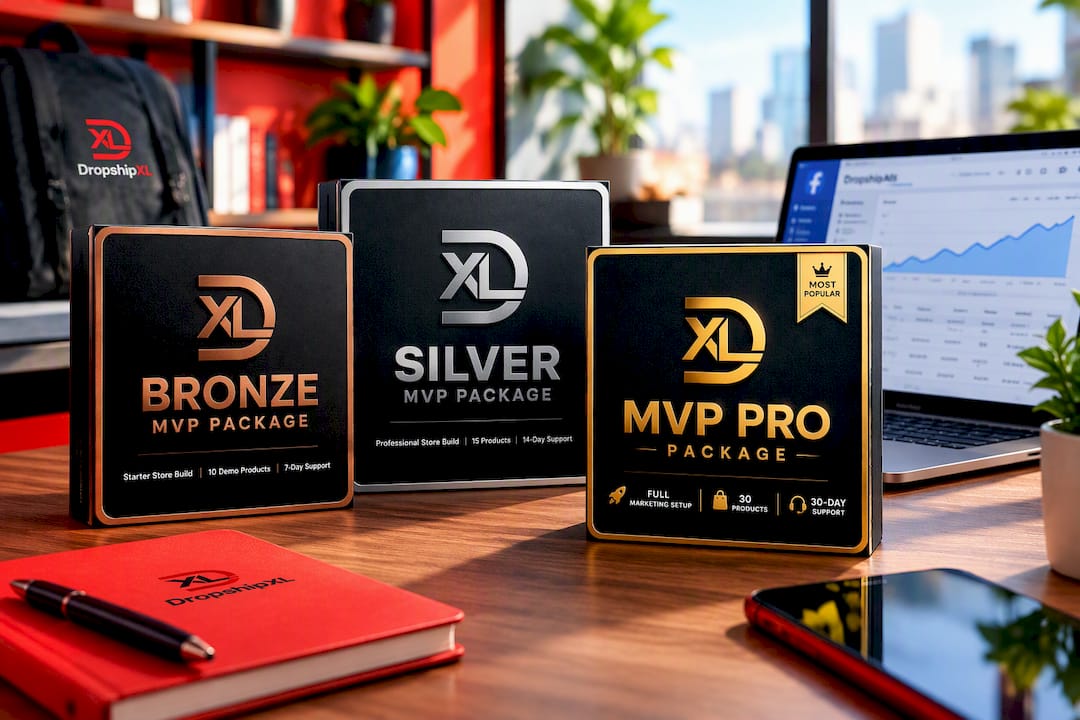
- New to dropshipping? My Academy Membership walks you through the full seven-step process, including ad strategy.
- Want your store built for you? My design packages handle setup so you can focus on campaigns.
- Need a faster, lighter launch? My DFY Focus 1 and Mentoring package combines a single high-converting page with direct guidance.
- Want direct answers to your situation? A free 30-minute dropship mentoring call gives you a real person reviewing your campaigns and store.
Ready to put a profit-first ad strategy behind a store built to convert? Start with the MVP PRO Dropship Design Package and launch with the foundation that matches every tactic in this guide.
FAQ
How do I start running Facebook ads for dropshipping
Set up a Facebook Business Manager account, install the Meta Pixel and Conversions API on your store, and launch a purchase-optimized campaign with three to five creatives testing a single winning product. Start with a broad or Advantage+ audience and layer in retargeting once you have initial traffic.
Can I realistically make 10,000 a month dropshipping with Facebook ads
Reaching that level depends heavily on product margin, ad efficiency, and consistent testing rather than any fixed timeline. Stores that calculate break-even CPA correctly and scale winning creatives gradually tend to build toward consistent revenue faster than those chasing quick wins.
Is 1,000 enough to test Facebook ads for a new store
A 1,000 dollar budget can fund an initial test if you keep ad sets focused and track your break-even CPA closely, though thinner margins or expensive niches may need more room to find a winning creative. Spreading that budget too thin across many products or audiences usually weakens the test more than the budget size itself.
Is dropshipping dead in 2026
Dropshipping is not dead, but the stores that struggle are usually the ones skipping profit math, creative testing, and a real funnel strategy. Sellers who treat it as a structured business, with proper margins and tested ad creative, continue to see it work as a viable e-commerce model.
Run the system. Protect the margin. Let the data decide. In that order. — Trent

Here are 4 other ways I can help you when you're ready: