
Setting up a US bank account from outside the US is one of the hurdles I see international dropshippers stall on the most, so this article walks you through the exact sequence that actually works in 2026. The short version.
Most international founders do not walk into a US branch. They form a US LLC, get an EIN, and apply with a bank or fintech provider that onboards non-resident founders remotely.
I will cover what to line up, in what order, which banks accept non-resident owners, how the payment-processor side fits in, and the IRS and FinCEN reporting rules that catch dropshippers off guard. You will leave with a clear checklist before you apply.
Robert Herjavec said it the way a mentor would.
“The only way to succeed is to not be afraid to fail.” — Robert Herjavec
Paperwork anxiety is what keeps most international dropshippers from ever opening a US account. Every step on this page is something thousands of founders from dozens of countries have done before you. It takes a checklist and patience, not courage you do not have yet.
I have mentored more than 3,270 students across 17 years of ecommerce, and the ones who get through this phase treat the bank setup as a background task, not the main event. My US dropshipping startup guide, my LLC guide for dropshipping, and my US business formation guide all pair with the sequence below.
Why a US bank account matters for your dropshipping store
If you sell to US customers, a US dollar account does three things for you. It lets you pay US dropship suppliers in their own currency, it receives payouts from your payment processor without repeated conversion, and it gives US suppliers confidence when you apply for wholesale and dealer accounts.
Suppliers often ask for a business entity, a tax ID, and sometimes a resale certificate. A business account in your company’s name keeps that paperwork consistent across every supplier you onboard. My guide to finding suppliers that actually deliver, my supplier role breakdown, my wholesale supplier guide, and my supplier vetting checklist all expand the supplier side. Sellers sourcing in the US can also get a strong starting shortlist from Watchman Advisors’ USA supplier directory.
One honest caveat. You can start testing a store before your bank account exists. Many founders validate a product with a processor payout to a foreign account first. Once sales are real, a US account saves fees and headaches. My USA dropshipping suppliers guide and my resale certificate guide are worth reading alongside this one.
What US banks actually ask for when you apply
Bank of America’s page for non-residents is a useful baseline because it shows what a large traditional bank wants. According to its guidance for non-residents and non-citizens, requirements generally include:
- Two unexpired forms of ID, such as a passport plus a driver’s license or major credit card.
- A tax identification number, which can be a US SSN or ITIN, or a foreign tax ID.
- Proof of both a foreign address and a US mailing address.
The same page notes that requirements vary by institution, and that some banks accept a passport number if you have no SSN or ITIN. It also says opening an account is typically done in person at a financial center. A P.O. Box is generally not enough as your US mailing address.
A separate Bank of America guide for international students makes a point that holds for founders too. An SSN is not strictly required by every bank, but some form of tax identification is standard. Sort that out early. It is usually the biggest hurdle.
The language issue most international founders miss
Banks may offer interpreting help in 200-plus languages, but the official account documents, online portals, and legal disclosures are often only in English. Read the contract terms carefully, and get a trusted bilingual person to review them if English is not your first language.
The 3 routes to a US account from abroad
| Route | What you need | Best for | Watch out for |
|---|---|---|---|
| Traditional bank, in person | Two IDs, tax ID, foreign and US addresses, a trip to the US | Founders who can travel and want a full-service branch | Travel cost, varying rules by branch |
| Online business bank for an LLC | LLC approval, EIN, ID, business details | Remote founders who want to avoid travel | Each provider sets its own eligibility and country list |
| Payment processor balance only | Business details and ID, depending on the provider | Founders testing a store before forming a company | Not a bank account, and balances can have limits and holds |
For most remote dropshippers I mentor, the middle route is the practical one. It is the same sequence I walk students through in my full guide to opening a US bank account from abroad with an LLC and EIN. My dropshipping business model breakdown and my dropshipping career path guide both show how this route fits the long game.
How to go the LLC and EIN route step by step
- Decide whether an LLC fits your stage. An LLC separates your business from you personally and makes banking and supplier applications easier. My LLC for dropshipping guide covers timing and year-one costs.
- Form the LLC in a state. You file a document with a secretary of state or similar office and normally use a registered agent, which provides a US address for official mail. My US business formation walkthrough covers the mechanics.
- Get your EIN. The EIN is your company’s federal tax ID. The IRS online tool is generally built for applicants with a US-based responsible party, so non-US founders typically apply with Form SS-4 by phone, fax, or mail. Check the IRS instructions for the current method before you file.
- Collect your documents. Passport, a second ID, proof of your home address, the LLC’s formation documents, the EIN confirmation letter, and a clear description of what you sell.
- Apply with a bank that accepts non-resident owners. Check the eligibility list before you apply. Applying to a bank that does not serve your country wastes weeks.
- Connect your processor and suppliers. Once the account is live, link it to your payment processor and update supplier accounts with the new business details.
For a mentor-tested online banking setup for ecommerce founders, see my guide to using fintech for ecommerce. My dropshipping business plan guide covers how the LLC decision fits inside your first-year plan.
A quick note on business licenses
The bank may ask what licenses your business holds. Dropshipping rules vary by state and product. My US dropshipping business license guide and my dropshipping legality guide explain what to check before you sell.
Do you really need a bank account to take payments
Not always, and this is worth understanding before you spend time applying. Payment processors let you collect card payments and then pay out to an account. Whether you can take cards without a business bank account depends on the provider and the country. My international payment processors guide and my Canada payment processors guide both walk through the real US and cross-border options for online stores.
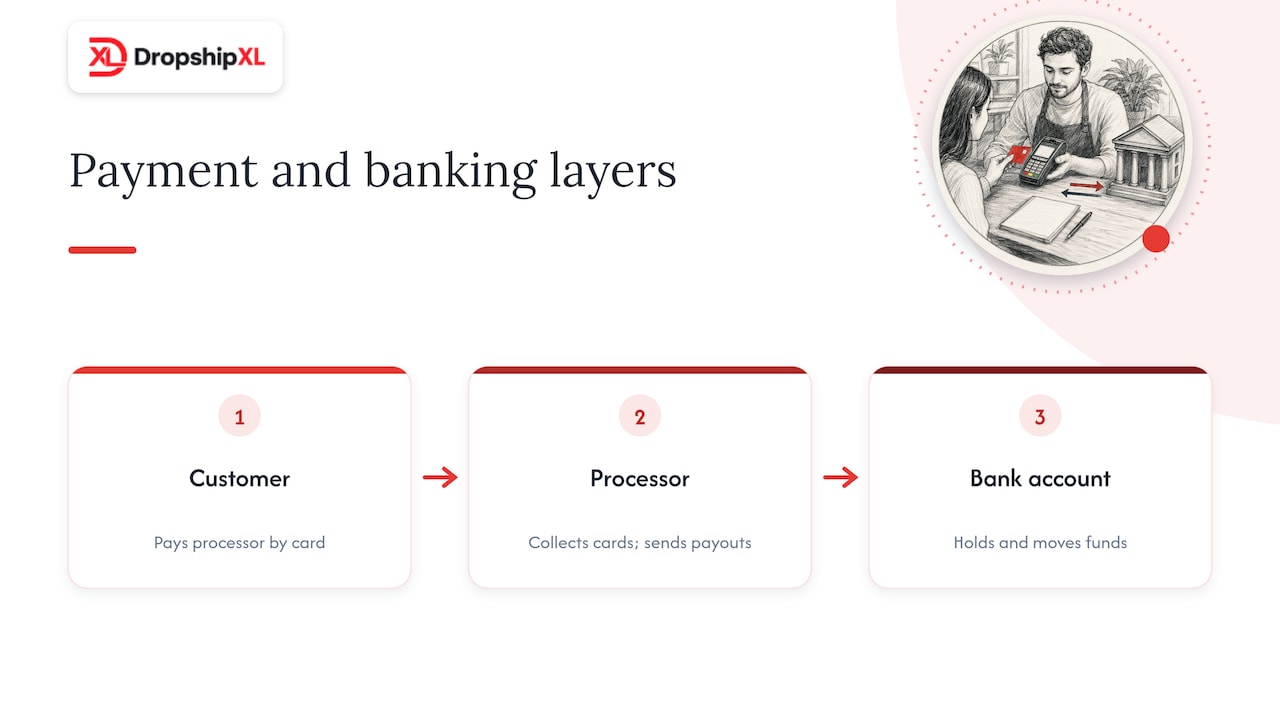
Think of it as two layers. The processor collects money from customers. The bank holds and moves your money. Most serious stores end up needing both. My chargebacks guide and my ecommerce fraud prevention guide cover what to put in place on the processor side before the first sale.
Reporting rules that catch dropshippers off guard
This section is general information, not tax or legal advice. For your own situation, talk to a CPA or tax attorney who works with cross-border businesses.
FBAR and when you have to file one
If you are a US person, which includes US citizens, resident aliens, and US entities such as LLCs, and you have a financial interest in or signature authority over foreign financial accounts, you must report them on FinCEN Form 114 when the combined value passes 10,000 dollars at any time in the calendar year. The IRS FBAR page explains this, and it applies even when the accounts produce no taxable income. Penalties for missing it can be significant.
This catches dropshippers who hold funds in foreign bank accounts or international payment balances. Add up everything, not just your main account. The IRS also publishes a comparison of Form 8938 and FBAR requirements because some people must file both.
Beneficial ownership rules worth knowing
Two separate things get confused here.
- Bank due diligence. When you open a business account, the bank is legally required to collect information on who owns and controls the company. FinCEN’s notice to customers says this is separate from FinCEN reporting.
- FinCEN BOI reporting. According to FinCEN’s BOI page, domestic US entities, meaning those created by filing with a secretary of state or similar office, are currently exempt. Only certain foreign entities registered to do business in the US may need to report.
Rules in this area have changed more than once, so check FinCEN’s page before you file or skip anything. My personal finance tips for new dropshippers covers the broader money-management habits that sit around these filings.
Mentor Tip. I have my students diary two reminders every January. One for an FBAR check, one for a quick scan of FinCEN’s BOI page. Fifteen minutes of calendar discipline keeps you out of the compliance mistakes that can cost thousands of dollars later.
How to sequence the setup so you do not stall for months
I see two mistakes with my international students. The first is waiting for the perfect bank setup before testing a single product. The second is rushing into a random account and discovering months later that it does not fit supplier or processor requirements.
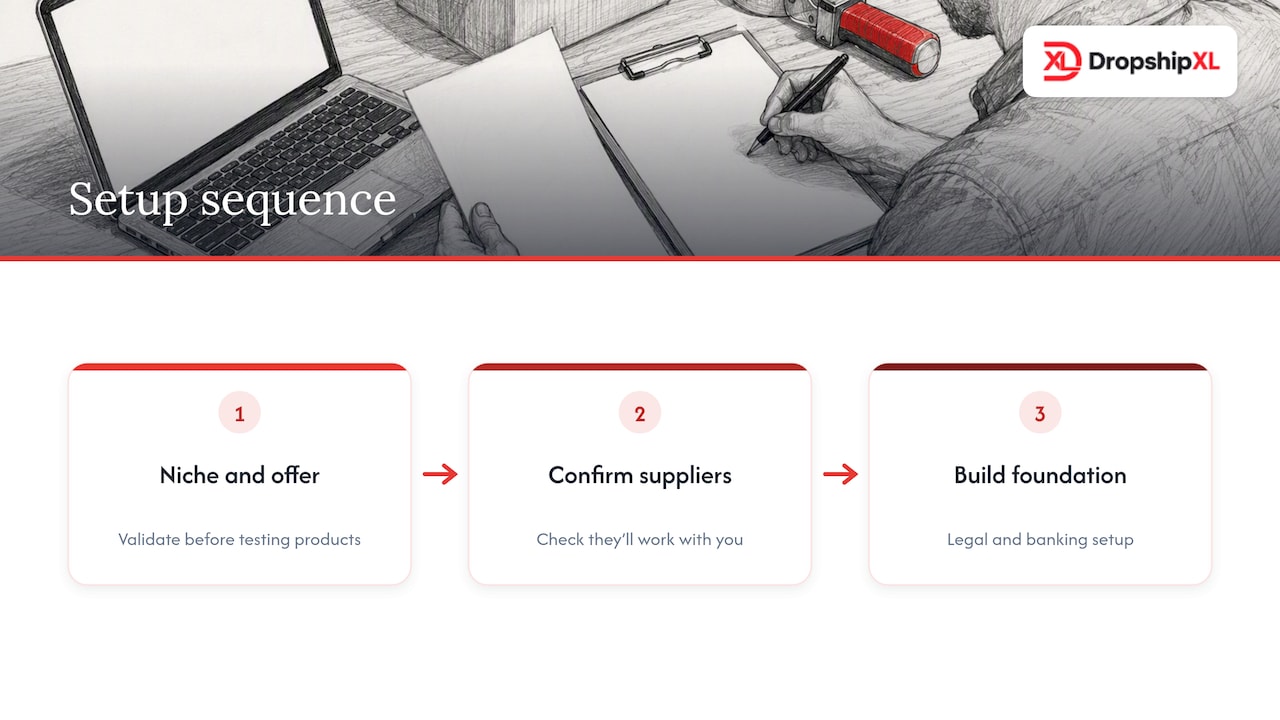
My approach is to sequence it. Validate your niche and offer first, confirm your suppliers will work with you, and then build the legal and banking foundation around a business that has real demand. That is the same seven-step process I used and still use to build and scale my own ecommerce brand. The bank account is infrastructure. It matters, but it does not make sales. My guide to starting a dropshipping business in 2026 and my launch checklist both show how this banking phase fits inside the first 60 days.
Do not let paperwork anxiety stop you. Every step on this page is something other founders from other countries have done. It takes a checklist and patience, nothing more.
How DropshipXL helps you set this up and build around it
If you want the whole path, not just the bank piece, my DropshipXL Academy Membership gives you the full seven-step curriculum for 997 dollars per year.
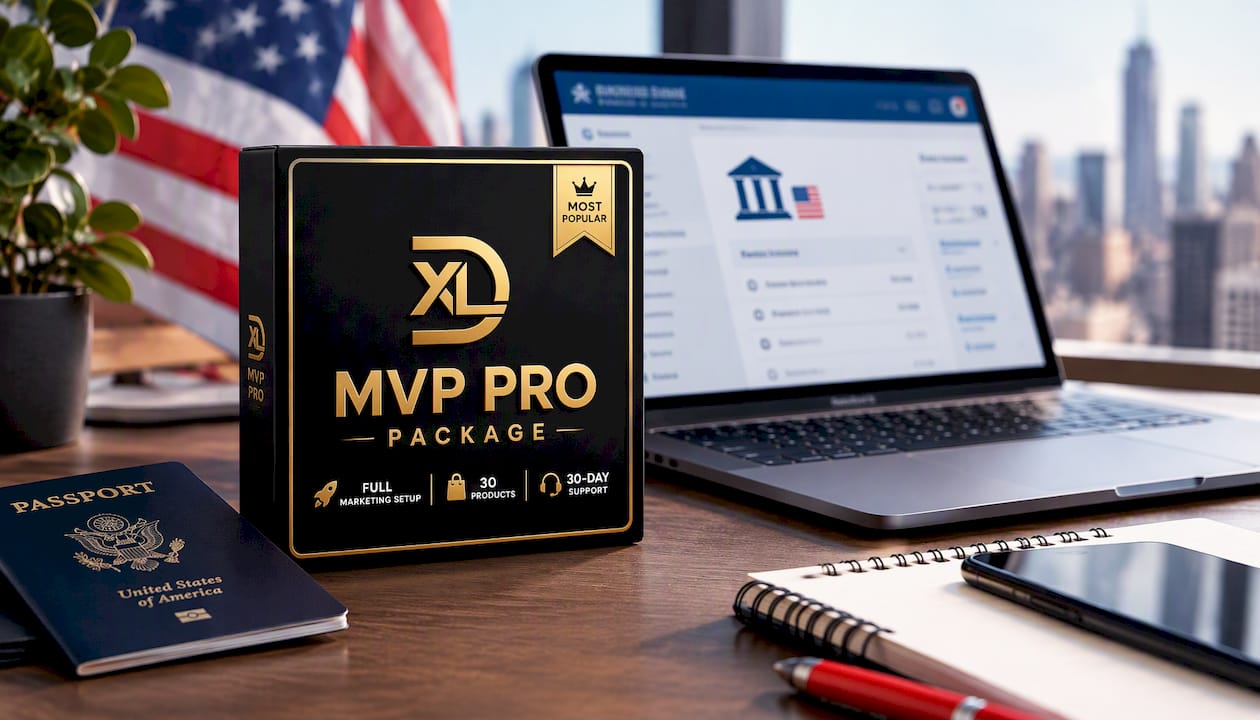
- MVP PRO Dropship Design Package. A done-for-you store build priced at 2,897 dollars one-off, built around a validated product your bank account can start receiving payouts for.
- DFY Focus 1 and Mentoring package. A lighter 697-dollar starting point for a single high-converting page with direct guidance.
- Free 30-minute dropship mentoring call. Walk through your setup, your country-specific banking questions, and your next move together.
- Ongoing 1-on-1 dropship mentoring. Personal guidance for founders who want hands-on help.
A simple checklist to run before you apply with any bank
- Passport and a second government-issued ID, both unexpired.
- Tax ID. SSN, ITIN, or foreign tax ID.
- Foreign address proof and a real US mailing address, not a P.O. Box.
- LLC formation documents and EIN confirmation.
- A short, honest description of your products, suppliers, and expected monthly volume.
- A plan for FBAR if you hold foreign accounts over 10,000 dollars in total.
If you plan to sell on marketplaces, read my compliance plan for US Amazon dropship sellers too.
FAQ
Can you actually open a US bank account from outside the US
Sometimes. Traditional banks such as Bank of America typically require you to open the account in person at a financial center. Online business banks may accept non-resident LLC owners remotely, but each sets its own rules, so check eligibility first.
Can you have a US bank account without a US address
Usually you need to provide both a foreign address and a US mailing address. A P.O. Box is generally not accepted for verification. A registered agent address attached to your LLC can serve as a business address, but confirm with the specific bank.
Do I need an SSN to open an account
Not always. Banks typically want some tax identification, which can be an SSN, an ITIN, or a foreign tax ID. Some may accept a passport number if you lack an SSN or ITIN, but this varies by bank.
Do I have to report my foreign accounts to the IRS
If you are a US person and the combined value of your foreign financial accounts exceeds 10,000 dollars at any time in the year, you generally must file an FBAR. Check the IRS page and speak with a CPA about your situation.

Here are 4 other ways I can help you when you're ready: