
Here is what you will walk away with from this article today:
- The 5 supplier types that actually protect your Amazon account
- The 6-step vetting sequence to run before you add a new SKU
- The exact documents Amazon needs on a packing slip
- How to add a dropship supplier without getting your seller account suspended in week one
So most of my mentoring at DropshipXL is on building a dropshipping business through your own store that you own and operate 100% without relying on a 3rd party to generate all your sales, not depending first on Amazon.
I only guide students through Amazon when it specifically makes sense to leverage that platform. This article is written for the select few of you adding dropship products to an existing Amazon seller account, or testing Amazon as a side channel. The rules below are what I share with those students.
Yes, you can add dropship products to Amazon without putting your seller account at risk. You have to treat supplier vetting as seriously as product selection. The safest path pairs vetted US-capable suppliers with a strict operational verification process before you add a single SKU to your listings.
The 5 Supplier Types That Actually Protect Your Amazon Account
Not every supplier fits every product or margin target. The first job is matching the category to your goals.
US-warehouse dropship platforms hold inventory domestically and ship fast, usually within a day or two of order placement. They cost more per unit than overseas options. They protect your Amazon metrics. Late shipments directly hurt your seller rating.
Authorized wholesale distributors carry name-brand products. They often provide the documentation Amazon requires for gated categories, including invoices that support brand approval. For a vetted US directory, the Watchman Advisors US dropshipping suppliers directory is where I send students who want faster domestic shipping.
Supplier directories aggregate thousands of vendors in one place. They save you research time. Listings vary wildly in quality and require your own verification.
Print-on-demand suppliers work well for custom apparel, mugs, and similar goods. You design the product. The supplier handles production and shipping.
Niche specialists focus on a single category, like pet supplies or outdoor gear. They tend to know their product lines well enough to flag quality issues before they become returns. See my role of suppliers in dropshipping guide for the full framework.
Where to Hunt for Dropship-Friendly Suppliers Who Will Actually Answer You
Where you look matters as much as what you look for.
- Directories. They list many US-based suppliers and basic terms. Treat every listing as a starting point, not a guarantee.
- B2B marketplaces. They connect you to manufacturers and distributors directly, often with better margins but higher minimum order requirements.
- Platform apps. Inside Amazon’s Seller Central ecosystem, supplier integration tools claim US stock and fast tracking. Treat catalog-size claims as marketing until you confirm them yourself.
Matching supplier choice to shipping speed, margin targets, and Amazon’s compliance expectations should drive your selection. Not price per unit alone. Domestic warehouse availability tends to matter more than catalog size once you start scaling. For how this flows into your profit math, see my dropshipping profit calculator guide.
If you are adding your first dropship SKUs to an Amazon account, prioritize US-warehouse options over cheaper overseas alternatives. The margin you save upfront often disappears the moment a late shipment damages your order defect rate. Directories and POD work well for testing a product category cheaply before you commit to a deeper supplier relationship.
This week, take three concrete steps. Search a vetted directory for suppliers in your category. Request proof of warehouse location and shipping timelines directly from each candidate. Place a sample order with your top two choices before you list a single product live.
How to Vet a Supplier Before Amazon Suspends Your Account
Amazon’s drop-shipping policy is specific. Violating it can suspend your account fast. The policy requires that you remain the seller of record on every order. It prohibits packing slips, invoices, or packaging that identify a third-party drop shipper. You are also responsible for handling your own customer returns, not the supplier.
Run every candidate supplier through this sequence before you commit.
- Confirm seller-of-record compliance. Ask directly whether their packing slips, invoices, and packaging ever reference their company name. Get it in writing.
- Place a sample order. Order the exact product a customer would receive. Inspect the box, the invoice, and the packing slip for any third-party branding.
- Test tracking accuracy. Confirm tracking updates at every hand-off point, from warehouse to carrier to delivery. Not just at the start and end.
- Time the delivery window. Measure actual transit time against what the supplier promised. Repeat the test during a high-volume period like a holiday sale.
- Request documentation samples. Ask for a blank commercial invoice template, a letter of authorization if you are selling branded items, and the warehouse address they will ship from.
- Confirm the returns SLA. Send a mock return request. Time how long it takes them to process it. You are the one answering to the customer. See my returns address guide for how to word this on your store.
Mentor Tip. I have my students run the sample order and the returns test at the same time. That way they are not waiting weeks to learn whether a supplier fails on both fronts. One week. Both answers.
Some issues are disqualifying no matter how good the pricing looks. A supplier that refuses to remove their branding from packaging, cannot produce a sample invoice, or hedges on returns handling is a walk-away, not a negotiation.
The same goes for any supplier that fulfills by buying from another retailer and shipping that retailer’s box. That is a common Amazon disqualifier. If you are selling restricted or gated items, a wholesale distributor offering FBA-ready invoices and letters of authorization can save you weeks of back-and-forth with Amazon’s category approval team. Only if the documentation actually holds up during a real test order. For the broader framework, see my guide on finding dropship suppliers that actually deliver.
How to Add Dropship SKUs to Your Amazon Listings Without Breaking Your Metrics
Once a supplier passes vetting, the real work starts. Build the operational layer that keeps your Amazon account metrics healthy as you add orders through this new supplier.
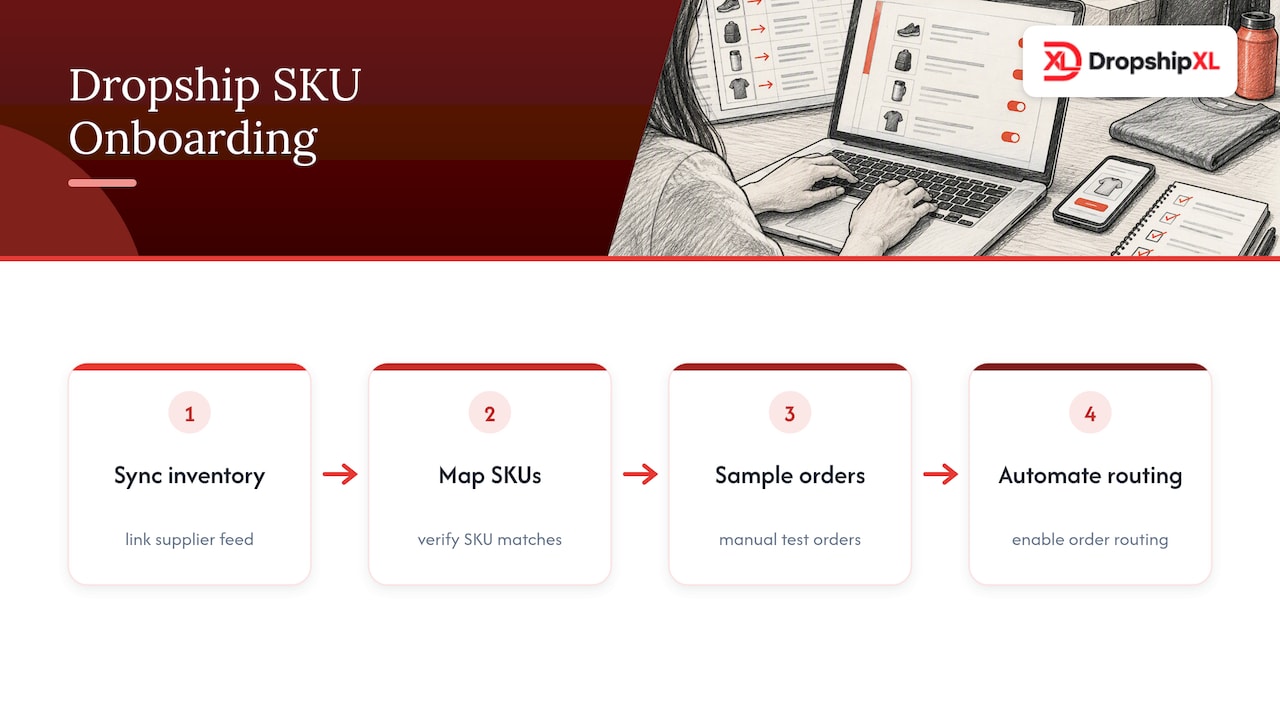
Integration first. Set up inventory sync between the supplier’s stock feed and your Amazon listings so you are never selling something that is actually out of stock. Map SKUs carefully. A mismatched SKU is one of the fastest ways to ship the wrong product. Automate order routing where you can. Run a handful of orders manually first to catch mapping errors before they multiply.
Listing and fulfillment setup. Decide between Merchant Fulfilled Network (MFN) and Fulfillment by Amazon (FBA) based on how much control you need over shipping speed. MFN keeps you closer to the supplier relationship but puts shipping performance directly in their hands. Set your listed lead times conservatively. Promising two-day shipping on a supplier that typically takes four creates a gap that shows up in your metrics. Build your returns process before you need it, not after your first complaint.
Monitoring and escalation. Track shipment confirmation timing closely. Verify tracking at every hand-off point and inspect product condition on sample orders. The same checks catch problems before they reach customers. Build a late-shipment playbook in advance. Who you contact. What you tell the customer. When you escalate to a backup supplier. For the full chargeback-prevention side of this, see my chargeback prevention guide.
A few templates make this manageable. A sample order checklist you run on every new supplier. An invoice verification template you compare against each shipment. A returns script your team uses consistently. If returns start climbing, the fix often is not the supplier at all. It is product presentation. Unclear sizing and product expectations drive a meaningful share of avoidable returns. For how the right page design cuts those returns, see my guide on how dropship store design increases sales.
Mentor Tip. I have my students treat operational verification as the one habit that catches the majority of supplier problems before they reach customers. Sample-order testing, run consistently, prevents more account damage than any amount of upfront research alone.
How I Support the Select Few Who Choose Amazon at DropshipXL
Most of my mentoring is focused on helping students build a dropshipping business through their own store, not through Amazon. For the select few who choose Amazon as their platform, I share the supplier vetting, sample-order, and documentation checklists above. Those students use the same core 7-step process I teach every student, applied to Amazon’s rules.
The resources that make this practical for Amazon sellers:
- A curated starting point of vetted US dropshipping suppliers instead of combing directories blind.
- Sample-order and invoice verification templates so you are running the same checks I share with students.
- A returns-script template that keeps your customer responses consistent and compliant.
- Access to the broader DropshipXL library of supplier comparisons and operational guides.
For the wider framework that applies whether you sell on Amazon or your own store, see my role of suppliers in dropshipping guide.
Most Amazon account suspensions I see trace back to a supplier relationship nobody tested with a sample order first. — Trent
When Adding Dropship Products to Amazon Actually Fits Your Business
Adding a dropship SKU to an Amazon account fits best when you are testing a new product category without capital tied up in inventory, or when you are broadening an existing catalog without warehouse space. It fits poorly when your margins are already thin and a supplier’s shipping delays would wipe out your profit on every late order.
The most common failure mode I see on Amazon is not a bad product. It is skipping the sample order and discovering packaging problems after fifty sales, not one. A short mentoring conversation before you commit catches this almost every time. For how to size the test before you launch, see my steps to validate a profitable dropshipping product.
Pick the DropshipXL Path That Fits Your Situation
My core mentoring is focused on building a dropshipping business through your own store, which is where most of my students sell. If you want to walk through whether Amazon fits your situation at all, or whether a direct-to-consumer store would serve your goal better, that conversation is the right place to start.
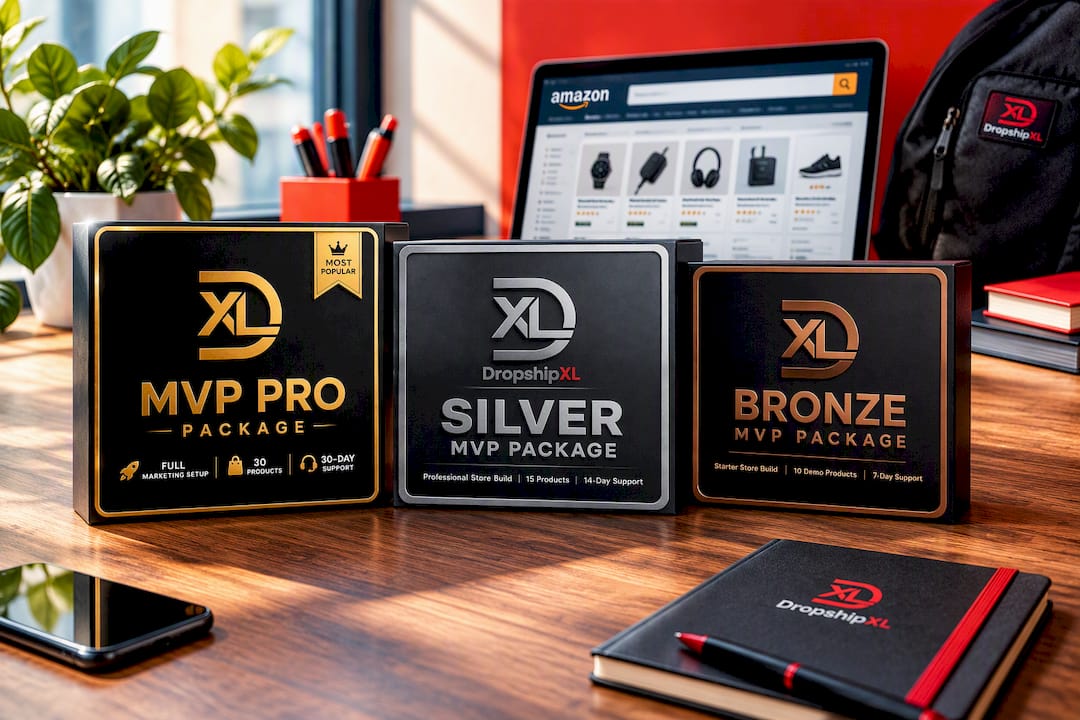
If you decide your own store is the better path, my MVP PRO Dropship Design Package builds the whole store for you. Store setup, supplier approval guidance, and marketing training all included.
Book a Free 30-minute dropship mentoring call with me and we will map out your next step together, whether that step is Amazon or your own store.
FAQ
Is Amazon a dropshipping company
No, Amazon is a marketplace and retailer, not a dropshipping company. Amazon does allow sellers to dropship on its platform as long as the seller remains the seller of record and follows its drop-shipping policy.
How many dropshippers fail
There is no single reliable figure for dropshipping failure rates. Outcomes vary widely by product, supplier quality, and how closely sellers follow Amazon’s compliance rules. The sellers who struggle most tend to skip supplier verification and discover packaging or shipping problems only after they have added products and started running orders.
Who is the best dropshipping supplier in the US
There is no single best supplier. The right choice depends on your product category, margin targets, and shipping speed needs. Start with a vetted directory, then run every candidate through sample orders and documentation checks before committing.
Who is the highest paid dropshipper
There is no verified public ranking of dropshipper earnings. Most sellers do not disclose revenue and figures circulating online are not independently confirmed. Success in dropshipping tends to correlate more with consistent supplier vetting and operational discipline than with any single breakout result.
What documents does Amazon require for dropshipped items
Amazon requires that invoices and packing slips show you as the seller of record, with no third-party branding from your supplier. For gated or branded categories, you may also need a letter of authorization. Wholesale distributors serving Amazon sellers can often provide one alongside FBA-ready documentation.
Vet the supplier. Order the sample. Test the returns flow. Then add the SKU. In that order. — Trent

Here are 4 other ways I can help you when you're ready: