
By the end of this article you will know which type of coffee supplier fits your stage, how to vet one so the FDA and USDA do not shut you down, the real margin math on a 12-ounce private-label bag, and the exact one-week validation test I run with students before they commit a dollar to a roaster. I have mentored over 3,270 students through launches like this. Everything below is the shortcut version of what I teach on those private mentoring sessions.
Here is the short answer. For most new coffee dropshippers, a private-label roaster or a white-label dropshipper is the right supplier model. Confirm their FDA food facility registration and labeling compliance before you commit, and start with a sample order before you scale.
Supplier types and which fits your stage
Not every coffee supplier works the same way. Picking the wrong one for your stage costs you money and months. Four models dominate this space. Each one has a different tradeoff between control and simplicity.
- Private-label roasters roast and package under your brand name. You get control over flavor profile and packaging at a higher per-unit cost and often a real minimum order.
- White-label packagers sell a pre-made coffee under your label. Faster to launch but less say over taste or sourcing.
- Wholesale distributors stock multiple brands and sell in bulk. They suit resellers or cafes more than solo dropshippers who need single-order fulfillment.
- Dropship fulfillment services ship one order at a time directly to your customer. Lowest-friction entry point for a bootstrapper testing demand.
If you are testing a niche with little capital, a dropship fulfillment partner or white-label packager keeps your upfront investment low. Once you have validated demand and want a subscription model with repeat buyers, a private-label roaster with a flexible minimum order usually pays off. The margin and brand control compound over time. For how this scales up, see my guide on scaling dropshipping to a full-time business income.
Where to find US-available dropship-friendly coffee suppliers
Finding a supplier who will actually ship single orders, support private labeling, and answer your emails takes more than a quick search. A handful of channels consistently surface legitimate partners.
- Search specialty green coffee wholesalers and private-label roaster services that explicitly list dropship or fulfillment support on their site.
- Browse B2B supplier directories and trade show exhibitor lists for roasters who mention small-batch or pilot programs.
- Request a sample pack before committing. Evaluate cupping notes, roast date freshness, and packaging quality against your brand standards.
- Pilot a small batch order. Track turnaround time and communication responsiveness before signing a larger agreement.
Watch for programmatic per-city landing pages that list the same “top suppliers” with no real contact information. A legitimate wholesale partner like Royal Coffee will let you create an account, request samples, and talk to a real person about your volume and timeline. For the deeper vetting walkthrough, see my guide on how to find dropship suppliers that actually deliver. For a curated US directory, the Watchman Advisors US dropshipping suppliers directory is where I send students who want faster domestic shipping.
Mentor Tip. I have my students call the supplier’s sales line before they email. A quick phone call reveals how responsive the supplier will be once you are a paying customer.
Vetting and compliance checklist before you sign
Coffee is a food product. That changes what you need to verify compared to a typical dropship niche. Before you commit to any supplier, work through this checklist.
- Confirm the roaster’s FDA food facility registration status. Domestic and foreign facilities that manufacture, process, pack, or hold food for US consumers must register before operating.
- If the roaster is based outside the United States, ask who serves as their US agent. That is a requirement tied to the same registration rule.
- Check that any organic claims match USDA labeling requirements. Those rules require the certifying agent’s name to appear on the information panel.
- Request roast dates, shelf-life guidance, and sample cupping notes so you know what your customer will actually receive.
- Ask for references from other dropship or private-label clients and review their on-time shipping track record.
Domestic and foreign food facilities must register with the FDA before beginning operations that serve the US market. Skipping this check on an overseas roaster can leave you selling product that is not legally cleared for US shelves. See my 30-day legal checklist for new dropshipping sellers for the full compliance walkthrough.
Pricing, MOQs, and margin math you actually need
Coffee pricing varies widely depending on whether you are buying roasted private-label bags or starting from green beans. Packaging adds a layer of cost many new sellers underestimate.
- Green beans cost less per pound than finished private-label bags. You will need roasting capacity or a roaster partner to turn them into a sellable product.
- Private-label finished bags carry a higher per-unit cost that includes roasting, custom packaging, and labeling.
- Minimum order quantities vary by supplier. Some wholesale roasters offer free samples and flexible MOQs that let you pilot before committing to a large run. Keffa Coffee is one that supports this on its wholesale program.
- Negotiate a smaller first order in exchange for a committed reorder schedule once you have proven demand.
Say a 12-ounce bag costs you $6 landed, including packaging, and you sell it for $18. After a $3 shipping cost and $4 in ad spend per order, you are left with $5 in net profit per bag. That is a margin worth modeling before you scale ad spend. For the full P&L walkthrough, see my dropshipping profit calculator guide.
Fulfillment, shipping, and freshness without losing quality
Coffee is a consumable. Freshness directly shapes how your customers rate you and whether they reorder. Roast date matters more than almost any other variable. Beans that sit too long before shipping lose aroma and flavor. A supplier who cannot tell you their typical roast-to-ship window is a red flag.
- Ask your supplier how many days typically pass between roasting and shipping. Confirm whether bags use degassing valves to manage freshness in transit.
- Compare direct supplier-fulfillment, where the roaster ships straight to your customer, against using a third-party logistics partner for more control over packaging and branding.
- Set clear return and refund expectations upfront. Coffee cannot be resold once opened. Most suppliers will only replace damaged or incorrect shipments rather than issue a standard return. See my returns address guide for how to word this on your store.
Mentor Tip. I have my students ask for a one-way bag valve by name. That one packaging detail keeps roasted coffee fresher for weeks longer in transit, and most new sellers do not know to ask.
How dropshipping coffee can be profitable
Coffee dropshipping can be profitable. The path to meaningful revenue depends on a few specific levers rather than traffic alone.
- Average order value rises when you bundle multiple bags or add a grinder or mug. That lifts revenue per transaction without adding new customers.
- Repurchase and subscription rate matters more in coffee than almost any other dropship category. A habitual buyer returns monthly without new ad spend. See my guide on why repeat buyers matter for the full retention playbook.
- Margin on private-label product runs higher than reselling a generic wholesale brand. You control the price point.
- Customer acquisition cost relative to lifetime value decides whether your ad spend is sustainable as you scale past your first few hundred orders.
When your subscription base grows large enough that fulfillment delays start hurting retention, that is usually the signal to consider holding limited inventory or locking in a dedicated roaster relationship rather than staying fully dropship.
How I help you accelerate a coffee dropship launch
I have personally mentored over 3,270 students through the same 7-step process I still use to run my own ecommerce brand. My MVP PRO Dropship Design Package builds your store, guides you through supplier approval, and includes launch marketing training. Together with my mentoring, these resources cut the trial-and-error time most new coffee sellers spend hunting for a reliable supplier on their own. For a wider framework on supplier relationships, see my role of suppliers in dropshipping guide.
Common contract terms and negotiation tips with coffee suppliers
Most coffee supplier agreements, private-label or wholesale, include a handful of recurring terms worth understanding before you sign anything. Minimum order quantity clauses specify how much you must purchase per order or per year. These are often negotiable for a new account willing to commit to a reorder cadence.
Payment terms range from upfront payment for a first order to net-30 terms once you have built a track record. Ask directly what is available to new accounts.
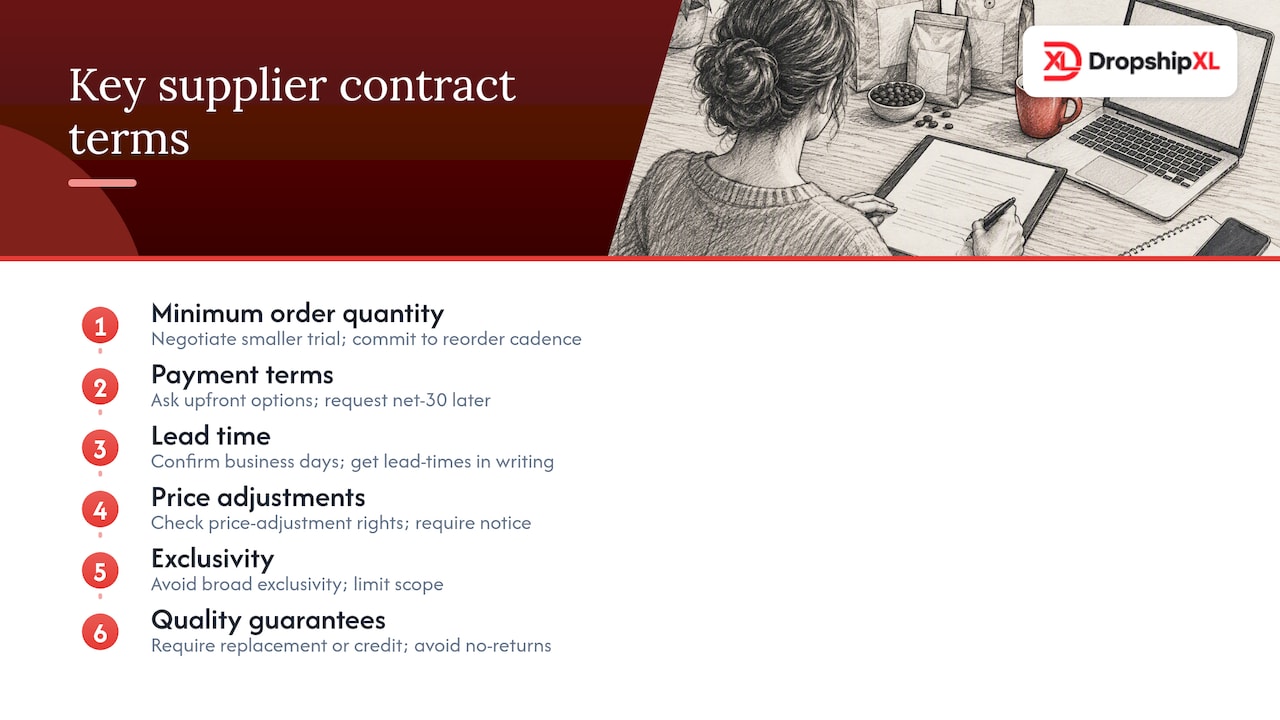
Lead time clauses spell out how many business days the supplier needs between order and shipment. That matters a lot for a consumable product where customers expect reasonably fresh coffee. Look for language about price adjustment rights. Green coffee prices move with commodity markets, and a supplier may reserve the right to adjust pricing with notice.
Exclusivity clauses sometimes appear in private-label agreements. They restrict you from sourcing a similar blend from a competing roaster. Read this carefully. It can limit your flexibility if the relationship does not work out. Quality guarantee and replacement terms should specify what happens if a batch arrives damaged or does not match agreed specifications, with a clear replacement or credit process rather than a blanket no-returns policy.
When negotiating, ask for a smaller trial order with the option to scale the agreement after a successful first few months. Suppliers who have worked with other dropship or private-label brands are usually open to this. It reduces their own risk alongside yours. Get any verbal promise about lead times, pricing, or exclusivity in writing before you commit.
Legal considerations beyond FDA and USDA rules
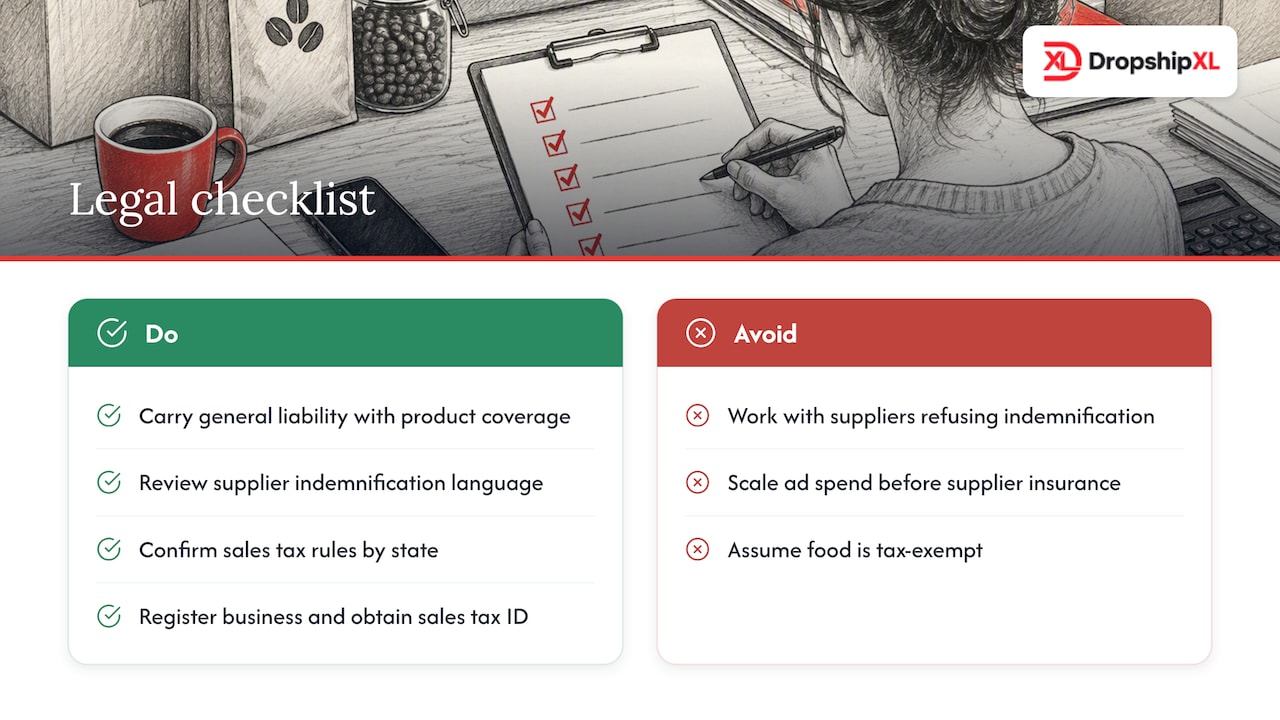
Food products carry legal exposure that goes beyond facility registration and labeling. Product liability is the biggest one. If a customer has an allergic reaction or finds a foreign object in their order, you as the seller of record can be named in a claim even though you never touched the product. General liability insurance that specifically covers product liability for food items is worth carrying before you scale past a handful of orders a month.
Review your supplier agreement for indemnification language. That determines whether the supplier covers costs if their product causes harm or fails to meet label claims. A supplier unwilling to offer any indemnification is a signal to keep looking.
Sales tax obligations apply to food products in most states. Some states exempt grocery items including packaged coffee, so confirm the rule for each state where you have nexus. Business registration and a sales tax ID are standard requirements regardless of the product category. My 30-day legal checklist for new dropshipping sellers walks through the setup steps in order. For licensing specifics tied to your state, see my US dropshipping business license requirements guide.
Before scaling ad spend, confirm your supplier carries their own product liability coverage. Keep a copy of their certificate of insurance on file. For how to prevent the chargebacks that follow a bad food shipment, see my chargeback prevention guide.
A one-week validation experiment you can run right now
Order samples from two suppliers on day one. Build a simple landing page by day three. Run a small ad test through day five. Track click-through and pre-order interest. A handful of real orders by day seven tells you whether to move forward. For how to size that ad test against your real margin, run the numbers through my dropshipping profit calculator guide before you spend a dollar.
Get a faster, lower-risk path to launch
Sourcing a reliable coffee supplier, building a store, and validating demand all at once is a lot to juggle alone. Most of the mistakes I see cost new sellers weeks of lost momentum rather than money. I built a few specific paths depending on how much hands-on help you want.
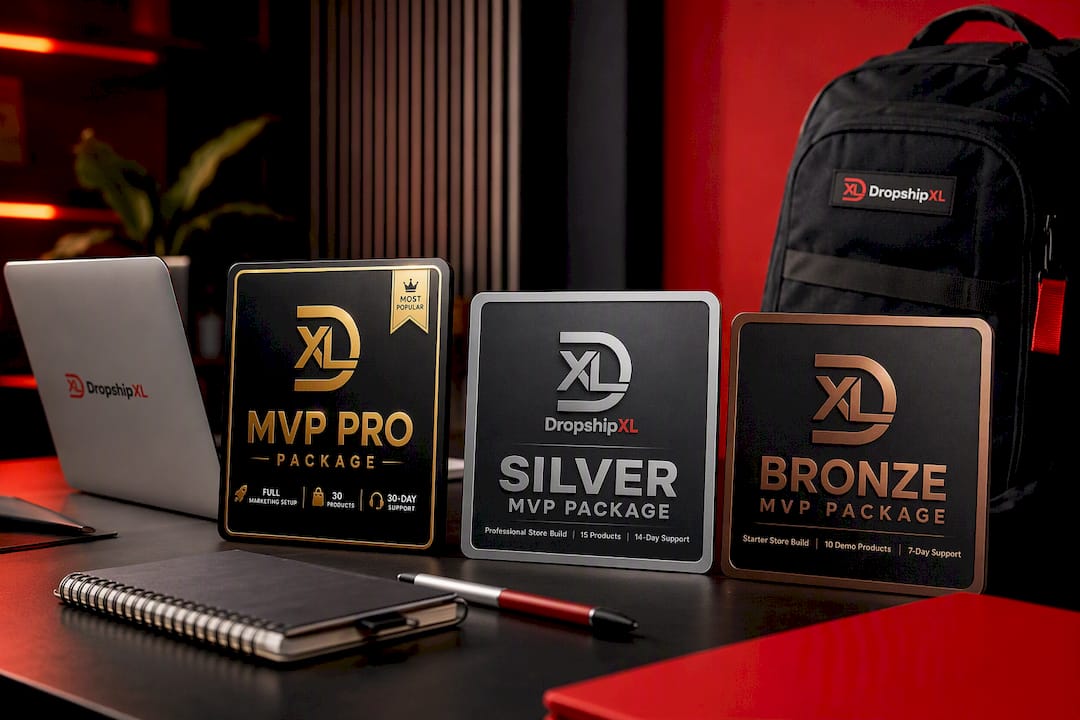
- The MVP PRO Dropship Design Package builds your full store, handles supplier approval guidance, and includes launch marketing training in one package.
- My 7-step mentoring curriculum covers supplier sourcing, outreach templates, and ongoing resources through the full launch.
- 1-on-1 mentoring pairs you directly with my guidance tailored to your specific niche and supplier questions.
When you are ready to move past research and get a store built around a vetted supplier relationship, book a Free 30-minute dropship mentoring call with me and we will map out your next step together.
FAQ
Is dropshipping coffee profitable?
Coffee dropshipping can be profitable when you focus on private-label margins and repeat subscriptions rather than one-time sales alone. Profitability depends on keeping customer acquisition cost below the lifetime value of a repeat buyer. Coffee is a habitual purchase category, which helps that math work.
Who are the best dropshipping coffee suppliers?
The right supplier depends on whether you want private-label control, white-label speed, or wholesale volume. Start with a wholesaler like Royal Coffee or Keffa Coffee for sample access and flexible MOQs. For a curated list of vetted options, the Watchman Advisors US dropshipping suppliers directory is a strong starting point.
Can I make $10,000 a month dropshipping coffee?
Reaching that level of monthly revenue typically requires strong repurchase rates, a healthy average order value, and margins that hold up after ad spend and shipping. It is achievable with the right supplier and marketing system in place. It depends on consistent execution rather than any single tactic.
What is the 15-15-15 coffee rule?
There is no single widely recognized industry standard behind this phrase, and definitions vary depending on the source. If you have seen it referenced for brewing ratios or roast timing, confirm the specific context before applying it to your sourcing decisions.
Vet the FDA registration. Order the samples. Run the one-week test. In that order. — Trent

Here are 4 other ways I can help you when you're ready: