
Could the hobby you already spend your weekends on actually turn into a profitable dropship business?
Something I come back to on every mentoring call: the problem you solve for a real person comes before anything else, and that is doubly true when the product is tied to a hobby you love, because your audience is a specific type of enthusiast with a specific unmet need, not “everyone who likes crafts.”
Once you know who you are serving, you can monetize a hobby through dropshipping, and it works best when you treat it as a fast, low-cost way to test whether people will pay for what you already love making or curating.
It is not a guaranteed income stream, and it is not a get-rich-quick play, but for the right kind of hobby product, it is one of the cheapest ways to find out if a real business sits inside your passion.
Here is the 30-second version of the plan before we get into the details.
- Pick one hobby-related product line, not five.
- Validate demand with a landing page or presell before you build a full catalog.
- List on a simple storefront with three to eight SKUs, max.
- Run one organic channel and one small paid test at the same time.
- Measure cost per acquisition against your margin, not against your gut feeling.
Quick-start checklist:
- Write down the one hobby product you would sell first (be specific: not “jewelry,” but “resin-cast pet memorial pendants”).
- Find two potential suppliers and request samples.
- Build a single landing page describing the product and collect emails or presells.
- Spend $100 to $300 on a tight audience test to see if anyone clicks and buys.
- Set a 30-day deadline to decide go or no-go based on actual orders, not likes.
Mentor Tip: I have my students skip the six-week organic content plan for their first test. Run a $50 to $100 single-audience paid ad pointing straight at a presell page. You will know in five to seven days whether strangers will pay for this, which is a faster and more honest signal than waiting for a following to build.
Dropshipping is a low-barrier model specifically because it lets you test a product idea without buying a warehouse full of inventory first. That is the whole appeal for a hobbyist: you get to find out if your passion has a market before you risk your savings on it. My start a dropshipping business guide covers where this fits in a full launch.
How Do You Know If Dropshipping Fits Your Hobby?
Dropshipping works by having a supplier hold and ship inventory while you handle marketing, customer service, and the storefront. You never touch the product. For a hobbyist, this is a fit test: does your hobby produce or relate to a physical good that a supplier can hold, ship affordably, and reproduce consistently? If yes, you have a shot. If your hobby’s magic comes from something a supplier cannot copy, like a live performance or a hand-thrown ceramic bowl that takes you four hours to make, dropshipping is not the right way to sell it.
Some hobby product types line up well with this model. Lightweight, non-fragile goods ship cheaply and survive transit. Items with repeat-purchase potential, like hobby consumables or accessories, keep customers coming back instead of buying once and disappearing. And anything you can customize through print-on-demand, think art prints, apparel with your own designs, or personalized gear, lets you keep creative control without holding stock.
Other categories tend to struggle. Regulated items (certain supplements, anything that needs safety certification) add compliance work most hobbyists are not ready to handle. Perishable goods do not survive a dropship supply chain. And very custom work, the kind where every piece takes hours of your personal labor, does not scale because you are still the one holding things up even if a “supplier” is technically shipping it.
Where dropshipping tends to win and lose for hobbyists:
- Pros: low upfront inventory risk, room to test multiple product angles fast, creative control over branding and design, easy to start part-time.
- Cons: thinner margins than owning inventory, depending on a supplier’s quality and shipping speed, less control over the unboxing experience, harder to build a durable brand over the long run.
Score your idea with a simple product-fit checklist.
- Is there a visible demand signal (search volume, active communities, existing paid competitors)?
- Does the math work at a 40% to 60% gross margin after shipping?
- Can a supplier fulfill it in under 10 business days reliably? My supplier sourcing guide covers how to confirm this.
- Do you own the design, or does someone else’s intellectual property sit in the middle of it?
- Will customers buy this more than once, or is it a one-time purchase?
Fishing lures, custom pet portraits, board game accessories, and hobbyist apparel tend to score well here. Fresh-baked goods, oversized handmade furniture, and anything that needs refrigeration almost always score poorly.
Mentor Tip: I have my students run the “ships in a padded envelope” test on every first product idea. If a product fails it, start with something easier to ship. Save the bulky or fragile items for later once you have proven demand with something simple.
What Is the Fastest Way to Validate Hobby Product Demand?
Run low-cost tests that measure real purchase intent, not likes or follower counts. A hundred Instagram likes tells you people find your product visually appealing. A presell order tells you they will actually hand over a credit card number. Those are very different signals, and only one of them predicts revenue. My niche validation guide walks through the full test I use with students.
Here is a sequence you can run in roughly 30 days.
- Build a one-page presell or “coming soon” listing describing the exact product, price, and shipping timeline, with a “reserve yours” button instead of “buy now.”
- Run a small paid ad test ($50 to $150) pointing directly at that page to a narrow, relevant audience.
- Post in two or three niche-specific communities or marketplaces where your hobby audience already gathers, being honest that the product is new.
- Collect email signups from anyone interested but not ready to buy, and follow up with a launch date.
- Reach out to one or two micro-influencers in your hobby niche for an honest opinion or a small paid mention.
- Count real conversions, not clicks, and decide go or no-go against a preset threshold.
Set your go/no-go thresholds before you start, not after you see the numbers, because it is too easy to make excuses for a weak result once you have already spent the money.
- Click-through rate on ads: aim for at least 1% before scaling spend further.
- Add-to-cart or presell rate: 2% to 5% of landing page visitors is a workable early signal.
- Cost per acquisition: should sit comfortably under your expected gross margin per unit.
- Minimum sample size: do not judge results on fewer than 500 to 1,000 ad impressions or 20 to 30 landing page visits from a real audience.
A hobbyist running this kind of validation with $100 to $500 over 30 days can usually tell whether a product idea has demand. Pre-sell tests specifically give a stronger purchase-intent signal than social engagement ever will. In the stores I have mentored, beginner stores in this space often see first sales within 30 to 60 days of launching, which is a useful benchmark to hold yourself to.
Which Fulfillment Option Is Right for Your Product?
The best fulfillment path depends entirely on what you are selling: print-on-demand for art and apparel, general dropshipping directories for low-cost accessories and gadgets, and vetted domestic suppliers when you need faster shipping and tighter quality control. My US-based dropshipping supplier directory is where I send students who want domestic speed.
Print-on-demand fits hobbyists selling designs, art, or apparel because you upload artwork once and the supplier handles printing, packing, and shipping per order. No minimums, no inventory, and you can test a dozen designs without risking much money. The trade-off is per-unit cost, which runs higher than bulk manufacturing, so your margins are thinner on volume.
General dropshipping directories work well for low-cost accessories tied to a hobby, phone grips for photographers, cable organizers for musicians, small tools for crafters. You get a wide product catalog to test quickly, but quality control and shipping times vary a lot supplier to supplier.
Vetted domestic suppliers give you more control and faster shipping, which matters once you have proven demand and want to reduce returns and improve customer experience. They often need more relationship-building and sometimes minimum order quantities, but the result is a more consistent product and shorter delivery windows.
Supplier vetting checklist before you commit, pulled from my supplier vetting checklist:
- Order a sample yourself and inspect it the way a picky customer would.
- Confirm shipping time SLAs in writing, not just marketing claims.
- Ask about branded packaging or insert options, even simple ones.
- Get their return and defect policy in writing before your first sale.
- Test their response time to a support question. That is a preview of what your customers will experience.
Practical steps that separate serious sellers from hobbyists who get hurt by a bad supplier: always order a sample before listing, put quality and return expectations in writing (even a simple email agreement counts), and track supplier response time as a real metric. My supplier performance tracking guide has the scorecard I give my students.
Mentor Tip: I have my students order their first sample to their own home address using a fake customer name in the shipping notes if the platform allows it. It is the closest thing to seeing exactly what your buyer will experience, packaging and all.
How Do You Build Your First Hobby Dropship Store?
Keep your first catalog small, three to eight SKUs, and focused on a single, clearly defined audience. A 200-product store looks impressive and converts nothing, because visitors cannot tell what you actually stand for. A tight catalog built around one main product tells a clear story in five seconds. My product page optimization guide covers how to build the pages that back it up.
Your build checklist, whichever platform you choose, should cover:
- A homepage that states who the store is for and what it sells in one glance.
- A product page for your main item, built out fully (see the table below).
- An about page that explains your connection to the hobby, since that honesty is your edge over generic stores.
- Working payment processing tested with a real transaction before launch.
- Shipping and return policy pages that are clear, not hidden in a wall of legal language.
Product page template that converts:
| Element | What Goes Here |
|---|---|
| Headline | The benefit or outcome, not the product name alone |
| One-sentence story | Why this exists, tied to the hobby community |
| Three benefits | Specific, not generic (“holds tension for 40% longer casts,” not “high quality”) |
| Sizing or fit details | Exact measurements, materials, compatibility |
| Shipping and returns | Realistic timeline, clear return window |
| Social proof | Reviews, photos, or community mentions if you have them |
| Call to action | One clear button, one clear next step |
Catalog rules for a hobby-first launch: one main product that stands for your core value, two supporting SKUs that go with it, and one high-margin upsell or bundle to lift average order value without adding supplier complexity.
Mentor Tip: I have my students write their product page story in the same voice they would use explaining their hobby to a friend at a dinner party. That honesty is genuinely hard for competitors to copy, and it is the single biggest advantage a hobbyist has over a generic reseller.
What Margin Should You Target, and What Will It Cost to Start?
Walk through the calculation yourself: sale price minus cost of goods minus shipping minus platform fees equals gross profit. From there, subtract your actual cost per acquisition from paid ads to get net profit per order. If a $40 product nets $20 gross profit but costs you $18 in ads to get the customer, you are barely breaking even, which is exactly why tracking CPA against margin from day one matters so much.
Typical startup costs for a hobby dropship launch:
- Store setup and basic design: $0 to $500 depending on how much you build yourself versus outsource.
- Sample orders from two to three suppliers: $50 to $150.
- Initial validation ad spend: $100 to $500.
- Product photography or design assets: $0 to $300.
- Domain, email, and basic tools: $50 to $150 for the first few months.
A realistic total to get through a 60 to 90 day testing window sits somewhere between $300 and $1,500, depending on how much you do yourself. As a rule of thumb, do not launch a hobby product below a price point that leaves you at least $15 to $20 of gross profit per unit, since anything thinner makes paid marketing nearly impossible to keep going.
One more thing worth handling early: the tax authority draws a real line between a hobby and a business, and failing to show a profit motive can cost you the ability to deduct legitimate expenses. Setting up a simple business structure and separate bookkeeping early protects you from that problem later. My LLC for dropshipping guide covers that setup.
How Should Hobbyists Market a First Dropshipping Launch?
Pick one organic channel and one paid test channel at launch, because spreading across five platforms with a $200 budget guarantees average results everywhere instead of a clear signal anywhere.
Match the channel to your hobby type:
- Social content works best for visually driven hobbies, art, crafts, fitness gear, where the product photographs well.
- Community forums and niche groups work for hobbies with tight, engaged communities, think fishing, tabletop gaming, or specific fitness disciplines.
- Email pre-sell lists work once you already have any following at all, even a small one, since warm audiences convert better than cold ones.
- Micro-influencer partnerships work well for hobbies where trusted voices carry real weight, like niche fitness or hobbyist crafts.
- Paid acquisition tests work best once you have a validated presell page ready to receive traffic. My Facebook vs TikTok ads guide covers how to pick the first platform.
Sample budget and expectations for a $200 to $1,000 test:
- Put 70% of budget into your strongest channel, 30% into a secondary test.
- Expect click-through rates in the 1% to 2% range on cold audiences for most hobby products.
- Target a cost-per-acquisition under 40% of your sale price to protect margin.
- Run the test for at least 7 to 10 days before making scale-or-kill decisions.
Outreach template skeleton for micro-influencers or community moderators: “Hi [name], I make [specific hobby product] and think it would genuinely fit your audience because [specific reason tied to their content]. Would you be open to a free sample in exchange for honest feedback, or a small paid collaboration?” Keep it short, specific, and clearly not copy-pasted.
Once you land first buyers, lifecycle tactics turn a one-time sale into repeat revenue: a short post-purchase email sequence, a bundle offer on the second purchase, and eventually a subscription or refill option if your product supports it. Track your customer acquisition cost against a rough lifetime value estimate so you know whether your paid channel is actually sustainable. My repeat buyers guide covers the retention side.
What Daily Operations Look Like Once Orders Start Coming In
Clear, documented procedures reduce mistakes and protect your brand reputation, especially when you are running this part-time around a day job or family schedule.
Order handling checklist, receipt to delivery:
- Confirm order details and forward to supplier within a set window (same day is ideal).
- Log supplier confirmation and expected ship date.
- Send the customer a shipping confirmation with tracking as soon as it is available.
- Follow up once with a delivery check-in email a few days after expected arrival.
Simple returns policy template: “If your item arrives damaged or defective, contact us within 14 days for a replacement or refund. Change-of-mind returns are accepted within 30 days in original condition, shipping paid by the customer.” Adjust the specific windows to match what your supplier can actually support. My returns address guide covers the pieces that keep returns from going sideways.
Customer service response time: aim to respond to every message within 24 hours, even if it is just to say you are looking into it. Silence is what turns a minor shipping delay into a bad review. My order fulfillment guide covers the whole flow in detail.
Mentor Tip: I have my students set up automated order confirmation and tracking update emails from day one. It is a small setup cost in time that saves you dozens of repeat messages a week once volume picks up, and customers genuinely appreciate the proactive update.
When Should You Move From Dropshipping to Holding Inventory?
Move to inventory once you have consistent unit economics and demand that justifies the carrying cost, usually when you need better margins or faster shipping than dropshipping can deliver.
Decision checklist before committing to stock:
- Have you seen 30 to 90 days of consistent sales on the same SKU?
- Can you identify your actual best-sellers with confidence, not a guess?
- Is your cost-per-acquisition reliably below your target threshold?
- Is your return rate stable and low, not jumping up and down?
- Does the storage and upfront capital math still leave you profitable?
If you answer yes to most of these, you have real scaling options: presell your main SKU before ordering stock to reduce risk, hold partial inventory just for your top one or two performers while keeping the rest of the catalog dropshipped, or negotiate better supplier terms once you have order volume to point to. Some sellers eventually move toward private labeling their bestsellers entirely, which is a natural next step once a product’s demand is proven. My scaling guide covers the full set of transitions.
Track basic inventory KPIs: sell-through rate, days of stock on hand, and stockout frequency.
Warning signs that inventory is the wrong move right now: demand that changes a lot month to month, a product with a short trend lifespan (seasonal or fad-driven items), or margins that stay thin even at higher volume. The hybrid approach, holding stock only on proven winners while dropshipping the rest, usually captures margin gains without the full risk of a stocked catalog.
Real Hobbyists Who Turned Passion Into Profit
Hobbyists carry two advantages a generic reseller never will: deep niche knowledge and existing community trust. You already know what your audience cares about, what language works, and what problems they actually have, which is a head start most dropshippers spend months trying to fake.
Case study one: The tabletop gaming accessory maker. A hobbyist frustrated with flimsy dice trays designed a custom version, validated it with a $150 presell test in a gaming forum, and had 40 presold units within two weeks.
Case study two: The fitness hobbyist selling resistance gear. After years in a niche fitness community, this seller ran a landing page test with a small Instagram ad budget of $200, collected 60 email signups and 12 presell orders in ten days, then launched a three-SKU store.
Case study three: The pet hobbyist with custom accessories. Starting from a small but loyal following built around dog training content, this seller tested custom pet tags through a print-on-demand supplier, validated demand with 25 orders in the first three weeks, and scaled to holding partial inventory on the best-selling design within four months. My examples of successful dropshipping stores show more of these patterns in detail.
My 7-step framework for these kinds of launches:
- Pick a hobby niche with clear demand signals and a product you can source or design.
- Validate with a presell or landing-page test before building a full store.
- Vet and secure two to three supplier options with samples in hand.
- Build a lean three-to-eight SKU store focused on one clear audience.
- Run a small paid and organic marketing test at the same time.
- Measure CPA against margin and decide go, adjust, or kill.
- Scale winners toward partial inventory or expanded marketing once proven.
Timeline example for a part-time hobbyist: niche and validation, days 1 through 20; supplier sourcing and store build, days 21 through 45; marketing test and first sales, days 46 through 75; scale decision and inventory planning, days 76 through 180.
Why Hobbyists Often Outperform Generalist Dropshippers
The common wisdom in dropshipping circles says niche knowledge does not matter much, that a good product and a good ad will sell regardless of who is behind the store. That is wrong for hobby products specifically. A hobbyist knows the exact objection a buyer will have before they type it in a support message, because they have had that same objection themselves. That is not a soft advantage. It shows up directly in ad copy that converts on the first try instead of the fifth, in product descriptions that do not sound like they were written by someone who has never held the product, and in customer trust that a faceless store simply cannot copy.
Where hobbyists actually struggle is not passion. It is discipline around the quiet parts: setting a hard go/no-go date on a validation test, documenting supplier terms instead of relying on a friendly email, and treating the first 90 days like a real business decision rather than an extension of a hobby budget. Having mentored more than 3,270 students through this exact process, the pattern that separates the ones who reach consistent monthly sales from the ones who stop early is not talent or product quality. It is whether they set a measurable checkpoint and actually respected it when the numbers came in.
Pick one small experiment this week. Not five. One. Set a single metric you will measure against a real deadline, and let the number decide your next move instead of your excitement.
Serve the hobbyist first. Fix the margin second. Scale the ad spend third. — Trent
How I Can Get Your Hobby Store Live Faster
Mentoring paired with a done-for-you store build shortens the distance between “I have an idea” and “I have a paying customer,” and it heads off the mistakes that eat most hobbyists’ first three months.
My program centers on a structured 7-step process, the same one I use to build and scale my own ecommerce brand into six and seven figures, backed by supplier directories, ongoing accountability, and access to a full curriculum covering niche selection through scaling. For readers who would rather skip the design and setup work entirely, the MVP PRO Dropship Design Package builds you a lightweight, conversion-focused store, catalog structure, product pages, and payment setup included, so your energy goes toward validating your product and running your first marketing test instead of fighting store design decisions.
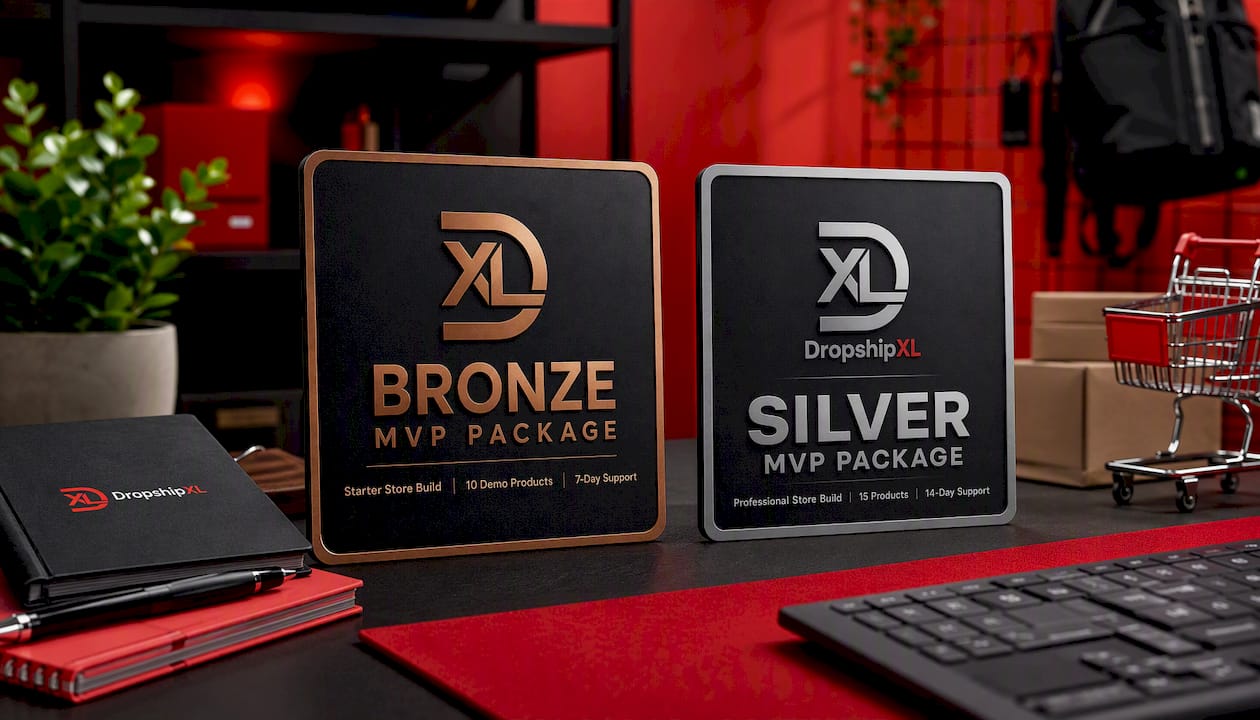
A typical engagement starts with a store built around your validated hobby niche, structured to launch within days rather than weeks, paired with guidance on supplier approval and initial marketing setup. If you want full access to the training, templates, and supplier resources I use with my students, the DropshipXL Academy Membership is where everything lives.
If you want to talk through your specific hobby product first, book a Free 30-minute dropship mentoring call. Fill out the short form, and we will go through where your idea is strongest and what the fastest fix is, not a generic sales pitch.
FAQ
Can I Make $10,000 a Month Dropshipping a Hobby Product?
It is possible but not typical in the first several months. Hitting that number usually takes a validated product, steady unit economics, and a few months of disciplined testing before volume ramps.
Is Dropshipping Dead?
No. Dropshipping is still a low-barrier way to test product demand cheaply, though it works best as a validation and early-stage model rather than a permanent long-term setup for every brand.
What Percentage of Dropshippers Fail?
Exact failure rates vary across sources and are hard to verify precisely, but thin margins, weak validation, and poor supplier vetting are the most consistent reasons hobbyists leave their stores within the first few months.
What Is the Most Profitable Item to Dropship?
There is no single universal answer, since profitability depends on your niche, margin structure, and audience trust, but products tied to an engaged hobby community with repeat-purchase potential (accessories, consumables, customizable goods) tend to do better than generic, trend-chasing items.
How Long Does It Take to Get My First Sale?
Many beginner hobby stores see first sales within 30 to 60 days of launching, assuming they run a real validation test before building out the full catalog rather than skipping straight to a store launch.

Here are 4 other ways I can help you when you're ready: