
What if the hobby you already spend hours on every week could pay your bills, replace your job, and give you the freedom to work from anywhere? Turning a hobby into a dropshipping business is the process of selling niche products online, without holding inventory, by partnering with suppliers who ship directly to your customers.
The hobby to dropshipping business steps covered here follow a proven sequence: validate your niche, vet suppliers, build your store, drive traffic, and scale with purpose. I’ve walked over 3,270 students through this exact process, many of whom reached genuinely profitable niches in their first few months by following the planning framework in my dropshipping business plan guide.
- Validate Before You Build
- Vet Suppliers Before Products
- Build a Store That Earns Trust
- Drive Traffic With What You Already Know
- Scale Without Burning Out
- What 3,270 Students Taught Me
- Build It Right From the Start
- Frequently Asked Questions
Validate Before You Build
Niche validation is the single most important step you will take. Skipping it is the number one reason beginners waste months building a store nobody buys from.
The standard validation framework I teach calls for 5 to 10 buyer interviews and a review of at least 5 direct competitors before you invest a dollar. I walk through this exact sequence in my steps to validate a profitable dropshipping niche. Those interviews reveal what buyers actually want, what price they will pay, and what frustrates them about current options. Competitor analysis shows you where the market has gaps you can fill.
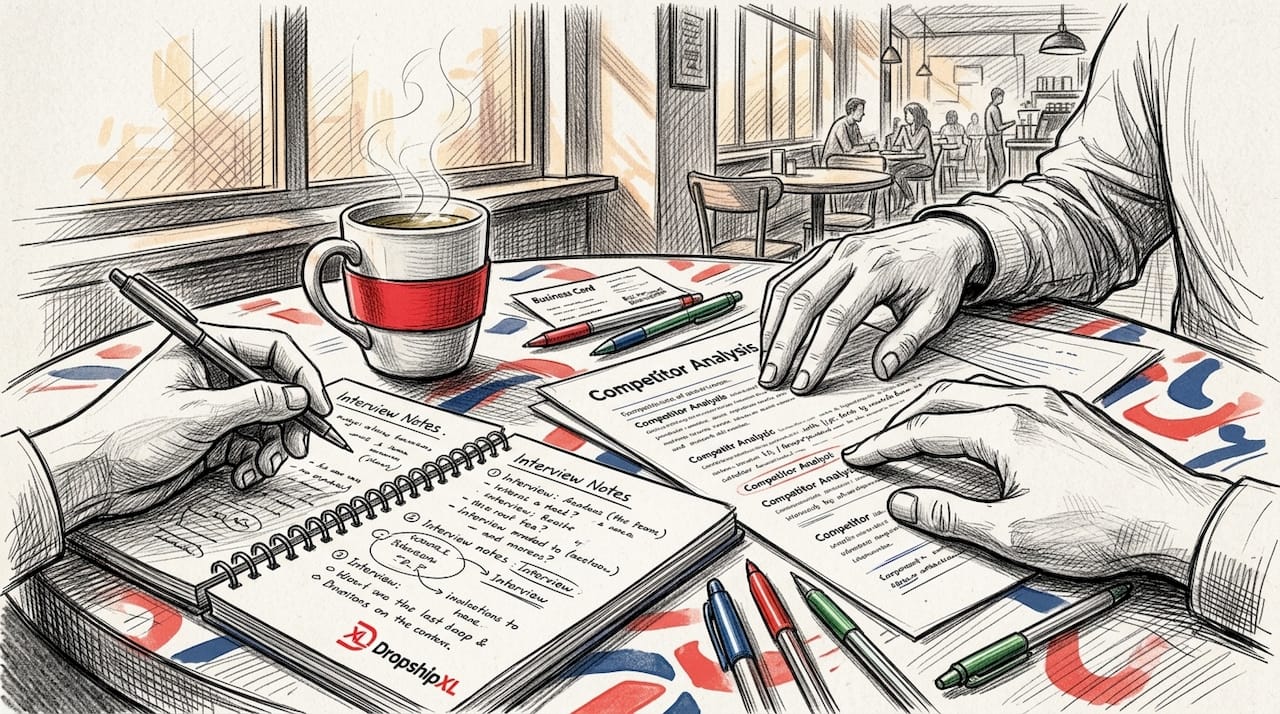
Use Google Trends to confirm that search interest in your hobby niche is stable or growing. Reddit communities and TikTok comment sections show you the exact language buyers use and the problems they complain about most. Pinterest boards reveal which products in your niche get saved and shared, which is a strong signal of purchase intent.
Pricing strategy matters here too. Calculate your cost from the supplier, add shipping, and check whether you can price competitively while keeping a healthy margin. Niche authority and brand quality drive long-term growth far more than chasing whatever product is trending this week.
Validation actions to complete before moving forward:
- Interview 5 to 10 people who match your ideal buyer profile
- Analyze 5 competitor stores for pricing, reviews, and gaps
- Check Google Trends for 12-month search volume stability
- Scan Reddit, TikTok, and Pinterest for buyer language and pain points
- Calculate your margin at realistic supplier and retail prices
Mentor Tip: Write down the exact words buyers use in interviews and Reddit threads. Those phrases become your product descriptions, ad copy, and SEO content later.
Vet Suppliers Before Products
Most beginners pick products first and then scramble to find suppliers. The smarter move is to vet suppliers first, then select products from their catalog. This approach gives you confidence in quality and shipping before you make any public promises to customers.
A reliable dropship supplier ships orders within a stated timeframe, communicates clearly when stock runs low, and has a fair returns policy. Evaluate every potential supplier on those three criteria before you list a single product. Poor communication from a supplier will cost you customer trust faster than any bad ad campaign. My guide on the role suppliers play in your store’s success covers the exact questions I have students ask before approving a supplier.
Supplier diversification prevents the fulfillment failures that kill early-stage dropshipping stores. Once a product sells consistently, add a backup supplier for that item. A single supplier going out of stock or raising prices can wipe out your momentum overnight. This is exactly why I point students toward vetted USA dropshipping suppliers as a starting pool instead of the first overseas catalog they stumble onto.
Supplier evaluation criteria:
- Verified business registration and contact information
- Shipping times that match or beat customer expectations in your market
- Clear returns and refund policy in writing
- Responsive communication within 24 to 48 hours
- Willingness to provide product samples before you list
Mentor Tip: Order a sample from every supplier you plan to use. You need to see the packaging, product quality, and actual delivery time before your customers do.
Build a Store That Earns Trust
Your store is your brand. Buyers decide within seconds whether they trust you enough to hand over their credit card. A clean, focused store built around your niche signals professionalism and earns that trust.
Choose an ecommerce platform that handles the technical side without requiring you to write code. Pre-built themes designed for your product category get you live faster than custom design, and they convert better because they are already tested. Beginners who prioritize niche validation over technical perfection consistently outperform those who spend weeks on store design before making a single sale. My 23-point dropship store checklist covers exactly what a store needs before launch, in order, so you are not guessing what to prioritize first.
Own your sales channel. A standalone store gives you full control over your customer data, your email list, and your brand identity. Marketplaces take a cut of every sale and can remove your listings without warning.
Store setup essentials:
- Clear brand name and logo that reflect your niche
- High-quality product photos with multiple angles
- Detailed product descriptions written in buyer language
- Customer reviews and social proof visible on product pages
- Shipping, returns, and privacy policy pages published before launch
- Mobile-optimized layout tested on at least two device types
Starting costs for a dropshipping store can stay under $50 when you use free platform tiers and organic content in the first 30 to 60 days. That low barrier is one of the strongest arguments for starting now rather than waiting until you have more capital. If you have not launched anything yet, my 7-step guide to starting a dropshipping business walks through this exact starting point.
Drive Traffic With What You Already Know
Traffic is the lifeblood of your store. Without it, even the best product sits unseen. The good news is that your hobby gives you a natural content advantage: you already know what your audience cares about.
TikTok videos and Pinterest convert well for niche dropshipping stores and grow over 3 to 6 months with little to no ad spend. Short videos showing your products in real use, tutorials, or behind-the-scenes content build an audience that trusts you before they buy. Instagram Reels follow the same pattern. Post consistently and engage with comments to build community around your niche. My guide to content marketing for dropshipping breaks down exactly which video formats and posting cadence work best for a niche store like yours.
SEO is a slower burn but pays off for years. Write product descriptions and blog content using the exact search phrases your buyers type into Google. Niche community engagement on Reddit and Facebook Groups builds referral traffic and brand recognition without spending a cent.
Paid ads make sense once you have validated your niche and have at least a few organic sales to confirm demand. Start with a small daily budget, test one audience at a time, and reinvest early profits back into what works. Reinvesting $50 to $100 per month into marketing compounds your growth over 6 to 12 months significantly faster than spending nothing.
Traffic generation tactics ranked by cost:
- TikTok and Instagram Reels (free, high reach)
- Pinterest product pins (free, strong purchase intent)
- SEO blog content targeting buyer keywords (free, long-term)
- Niche Reddit and Facebook Group engagement (free)
- Paid social ads with small test budgets (low cost, fast feedback)
- Google Shopping ads (moderate cost, high buyer intent)
Mentor Tip: Treat your first $100 in profit as a marketing budget, not a reward. Reinvesting early is what separates stores that plateau from stores that scale.
Scale Without Burning Out
Scaling is not just about selling more. It is about building systems that let you grow without burning out. The hobby-to-income transition fails most often when founders try to do everything manually as volume increases.
Track your conversion rate, average order value, and order fulfillment accuracy every week. Those three numbers tell you where your business is healthy and where it is leaking money. A conversion rate below 1% usually signals a product, pricing, or trust problem. Fulfillment errors signal a supplier problem.
Test new products methodically. Add one or two new items at a time, give them 30 days of traffic, and cut what does not sell. This keeps your catalog tight and your supplier relationships manageable. Use automation tools for order routing and inventory alerts so you are not manually checking stock every day.
Set clear work hours. Transitioning a hobby into a business means treating it with professional rigor and protecting your personal time. Burnout is real, and it hits hardest when the business starts to feel like a second job with no boundaries.
Optimization and scaling steps:
- Review conversion rate, fulfillment rate, and return rate weekly
- Add a backup supplier for every product that sells more than 10 units per month
- Test 1 to 2 new products per month and cut underperformers after 30 days
- Automate order routing and low-stock alerts
- Set defined work hours and stick to them
- Reinvest a fixed percentage of monthly profit into marketing
A dropshipping business plan that includes scaling milestones keeps you focused on the next goal rather than reacting to daily noise, which is exactly the structure I lay out in my guide to scaling a dropshipping business like a pro. Most organic-focused stores reach their first profitable month within 60 to 90 days of consistent effort. That timeline is realistic, not a guarantee, but it gives you a target to build toward.
What 3,270 Students Taught Me
The biggest mistake I see is treating dropshipping like a hobby even after deciding to make it a business. You have to make that mental switch early. A hobby tolerates inconsistency. A business does not.
The students who succeed fastest are not the ones with the most technical skills or the biggest starting budget. They are the ones who pick a tight niche they genuinely understand, talk to real buyers before building anything, and then show up consistently for 90 days. That combination beats every shortcut I have ever seen tried.
The students who struggle spend weeks perfecting their store design while ignoring whether anyone actually wants what they are selling. Niche authority built over time beats a beautiful store with no audience every single time. Your hobby knowledge is your real competitive advantage, and it is one of the marketable ecommerce skills that carries the most weight once you start creating content and speaking your buyer’s language.
Avoid chasing trending products outside your niche. That path leads to constant pivoting, wasted ad spend, and a store with no identity. Stay in your lane, go deep, and let your expertise do the selling.
Build It Right From the Start
Getting your store built correctly from the start saves weeks of frustration and prevents the technical mistakes that quietly kill conversion rates.

My MVP PRO Dropship Design Package gives you a professionally designed, niche-focused store with supplier integration already handled. You skip the technical setup entirely and go straight to marketing and sales. The package is built on the same framework I use for my own ecommerce brands, so you are not getting a generic template. You are getting a store designed to convert in your specific niche.
If you are ready to move from planning to selling, this is the fastest path to a store that is ready for real traffic. You can also book a Free 30-minute dropship mentoring call to talk through your specific niche first, or go ahead and join the DropshipXL Academy if you already know you’re ready.
Frequently Asked Questions
What Are the First Hobby to Dropshipping Business Steps?
The first steps are niche validation through buyer interviews and competitor research, followed by supplier vetting before you select products. Building your store comes after you confirm demand exists.
How Long Does It Take to Make Money Dropshipping From a Hobby?
Most organic-focused dropshipping stores reach their first profitable month within 60 to 90 days of consistent effort. Results depend on niche selection, content output, and how quickly you act on feedback.
Do I Need a Lot of Money to Start a Dropshipping Business?
Starting costs can stay under $50 using free platform tiers and organic content in the first 30 to 60 days. Paid advertising is optional until you have validated demand with organic traffic.
Why Should I Choose Suppliers Before Products?
Vetting suppliers first gives you confidence in shipping times, product quality, and returns policies before you make promises to customers. Choosing products from a vetted supplier’s catalog reduces fulfillment risk significantly.
How Do I Grow My Dropshipping Store Beyond the First Few Sales?
Reinvest early profits into marketing, add backup suppliers for your best-selling products, and test new items one at a time. Tracking your conversion rate and fulfillment accuracy weekly tells you exactly where to focus next.

Here are 4 other ways I can help you when you're ready: